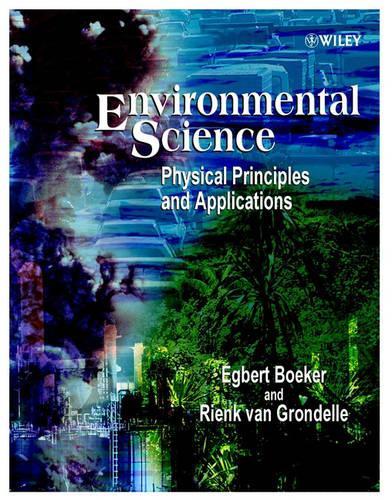
Книга Environmental Science: Physical Principles and Applications
Aimed at a first course in environmental physics, environmentalscience, environmental analysis, or environmental monitoring. Thistext can be used by first year students and above, and takes ascientific approach as opposed to a social or political one.Mathematics is kept to a minimum, although some background (school)knowledge of science is assumed. Courses would be taught inphysics, environmental science and physical sciencedepartments.
Comprehensively covering the field, this book brings together thelatest developments, theories, research and concerns, from both thescientific and social sides. Placing the environment firmly at thecentre of the scientific agenda, it provides all the backgroundneeded by readers to fully understand this important and often'hype-driven' subject. Whilst mathematics is introduced wherenecessary, it is carefully explained and kept simple, withderivations generally being avoided. Wherever possible, topics ofcurrent concern and relevance are included, and many examples,features and appetisers or mini-case studies are included,frequently drawn from publications such as New Scientist, Nature,Science, Physics Today and Scientific American. The book startswith a general overview of the subject, and then moves on to coverclimate, energy, pollutants, noise, measurements and socialaspects.Ein umfassende, ausgesprochen interdisziplinär angelegte Einführung in das Gebiet der Umweltwissenschaften! Sowohl aus natur- als auch aus gesellschaftswissenschaftlicher Sicht und in erfrischend sachlichem Stil werden hier neueste Forschungsergebnisse, Theorien, Arbeitsfelder und offene Probleme diskutiert. Ausgehend von den Grundlagen werden Aspekte des Klimaschutzes, der Energieerzeugung, der Schadstoffbelastung und des Lärmschutzes besprochen. Meßtechnische Details finden sich in einem speziellen Kapitel. Mathematische Formeln werden nur eingeführt, wenn es absolut notwendig ist, gegebenenfalls ausführlich erklärt und so einfach wie möglich gehalten. Auf Herleitungen wird generell verzichtet. Die zahlreichen Beispiele und Fallstudien betreffen hauptsächlich modernste Themen, zum Teil wurden sie renommierten Zeitschriften (New Scientist, Nature, Science, Physics Today und Scientific American) entnommen. Nützlich ist das mitgelieferte Lösungshandbuch. Weiterführende Informationen können auch vom zugehörigen Webserver abgerufen werden.