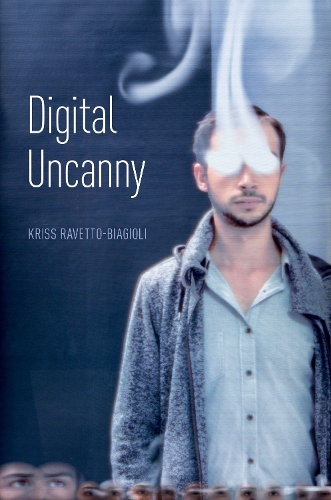
Книга Digital Uncanny
We are now confronted with a new type of uncanny experience, an uncanny evoked by parallel processing, aggregate data, and cloud-computing. The digital uncanny does not erase the uncanny feeling we experience as deja vu or when confronted with robots that are too lifelike. Today's uncanny refers to how non-human devices (surveillance technologies, algorithms, feedback, and data flows) anticipate human gestures, emotions, actions, and interactions, thus intimating that we are but machines and that our behavior is predicable precisely because we are machinic. It adds another dimension to those feelings in which we question whether our responses are subjective or automated - automated as in reducing one's subjectivity to patterns of data and using those patterns to present objects or ideas that would then elicit one's genuinely subjective-yet effectively preset-response. In fact, this anticipation of our responses is a feedback loop that we humans have produced by designing software that can study our traces, inputs, and moves. In this sense one could say that the digital uncanny is a trick we play on ourselves, a trick that we would not be able to play had we not developed sophisticated digital technologies. Digital Uncanny explores how digital technologies, particularly software systems working through massive amounts of data, are transforming the meaning of the uncanny that Freud tied to a return of repressed memories, desires, and experiences to their anticipation. Through a close reading of interactive and experimental art works of Rafael Lozano-Hemmer, Bill Viola, Simon Biggs, Sue Hawksley, and Garth Paine, this book is designed to explore how the digital uncanny unsettles and estranges concepts of "self," "affect," "feedback" and "aesthetic experience," forcing us to reflect on our relationship with computational media and by extension our relationship to each other and our experience of the world.
"In this consequential contribution to debates on the posthuman condition, Ravetto-Biagioli presents new and originals perspectives on both contemporary critical theory and recent interactive art to investigate a new body of affects, the computational uncanny, wherein the distinction between machinic and human thought processes are becoming undecidable." - D. N. Rodowick, Glen A. Lloyd Distinguished Service Professor in the College and the Division of Humanities at the University of Chicago
"Digital Uncanny brilliantly argues that digital technology provokes anxiety in humans, not because it is too life-like or just a little off (the so-called uncanny valley), but rather because it reveals that we humans are too machine-like. If our responses can be easily predicted and molded, what are we? Do we even own our own actions or emotions? Moving from the artworks of Lozano-Hemmer to popular films such as A.I., Ravetto outlines how the digital uncanny works and pinpoints resistance to surveillance technologies in our risky proliferation of responses and archives." - Wendy Chun, Brown University
"In the digital age everything needs to be updated, and Ravetto-Biagioli tells us how. What we used to fear should no longer scare us, what we used to deem paranoid is now reasonable, and even our most cherished memories are no longer safe. Digital Uncanny reveals how new techno-psycho assemblages have cut much deeper than Freud, Lacan, and Kittler ever imagined. By revealing previously undisclosed connections between the histories of art, technology and psychoanalysis, Ravetto-Biagioli offers a new testament to how the most natural has become the most uncanny." - Jimena Canales, author of The Physicist and the Philosopher: Einstein, Bergson and the Debate that Changes Our Understanding of Time and The Tenth of a Second: A History