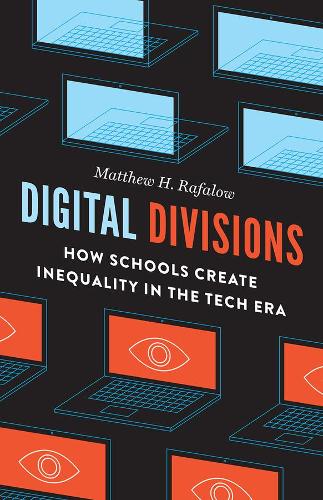
Книга Digital Divisions: How Schools Create Inequality in the Tech Era
In the digital age, schools are a central part of a nationwide effort to make access to technology more equitable, so that all young people, regardless of identity or background, have the opportunity to engage with the technologies that are essential to modern life. Most students, however, come to school with digital knowledge they’ve already acquired from the range of activities they participate in with peers online. Yet, teachers, as Matthew H. Rafalow reveals in Digital Divisions, interpret these technological skills very differently based on the race and class of their student body.
While teachers praise affluent White students for being “innovative” when they bring preexisting and sometimes disruptive tech skills into their classrooms, less affluent students of color do not receive such recognition for the same behavior. Digital skills exhibited by middle class, Asian American students render them “hackers,” while the creative digital skills of working-class, Latinx students are either ignored or earn them labels troublemakers. Rafalow finds in his study of three California middle schools that students of all backgrounds use digital technology with sophistication and creativity, but only the teachers in the school serving predominantly White, affluent students help translate the digital skills students develop through their digital play into educational capital. Digital Divisions provides an in-depth look at how teachers operate as gatekeepers for students’ potential, reacting differently according to the race and class of their student body. As a result, Rafalow shows us that the digital divide is much more than a matter of access: it’s about how schools perceive the value of digital technology and then use them day-to-day.
"Timely and well argued, Digital Divisions showcases the enduring power of socio-logical theories of inequality for a digital age." - The University of Chicago, Press
"Generally, educators believe that the 'digital divide' pertains to deficits related to internet access and access to hardware associated with digital technologies. This work suggests, however, that the technology skills gap experienced by minority populations is tied to teacher biases with respect to race and class, the prevailing school culture, and educator attitudes about student online interactions with peers and play in general. . . . Highly recommended." - Choice
"Beautifully written, shrewdly researched, and artfully argued." - The Arts Fuse
"Digital Divisions provides a robust and critical framework to understand digital technologies in the institutional reproduction of inequalities. . . . It deepens conversations in the sociology of education and youth culture, as well as the complex and evolving role of digital technologies in processes of social stratification. The book will have pedagogical appeal for courses in the sociology of education, youth, or digital society. Timely and well argued, Digital Divisions showcases the enduring power of sociological theories of inequality for a digital age." - American Journal of Sociology
"In Digital Divisions: How Schools Create Inequality in the Tech Era, Matthew Rafalow takes us into middle-school classrooms in three different schools to reveal how teachers use technology in the classroom and how school cultures and race shape that treatment . . . Readers interested in educational equity, racial stereotypes, organizational cultures, and technology will all find keen insights and experience 'a-ha’ moments while reading this compelling book." - Contemporary Sociology
"Considers the ways educational institutions cultivate innovators, explaining how disciplinary orientations to digital youth culture and play come from a complex mixture of perceptions and expectations within the school setting." - Journal of Economic Literature
"Barbas’s rich biography illuminates much about this important figure and his role in the creation of modern freedom of expression in the United States." - History