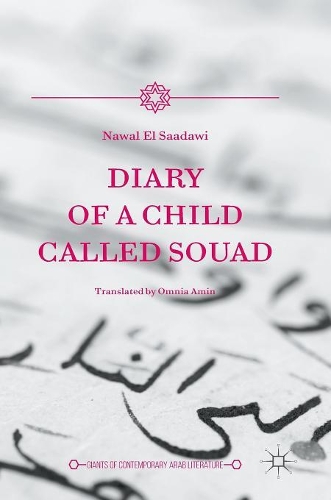
Книга Diary of a Child Called Souad
"Nawal El Saadawi is a writer and thinker of global significance; anything she writes is of relevance, not least of all in these times when stereotypes and soundbites determine much of the outsiders' perceptions of the Muslim world. Omnia Amin's skilful translation and editing of this early memoir of Nawal's adolescence puts us all in her debt. We are transported to a world where Nawal's earliest struggles were a hint of what was to come." (Dr. Peter Clark, writer, translator, and cultural consultant) "Like Egypt, her native land, Nawal El Saadawi is sui generis. She is a woman of stupendous genius and fighting spirit that we, Egyptians, may not see her like again. In Diary of a Child Called Souad, Nawal El Saadawi, who becomes more radical with age, guides us through her childhood memories with an athletic narrative that pulsates with life and the pursuit of freedom for women in Egypt and beyond." (Prof. Kamal Abdel-Malek, Professor of Arabic Literature, American University of Ras Al Khaimah, UAE) "Nawal El Saadawi remains the essential voice of Arab feminism-a voice that patriarchy was never able to silence. While we come across so many veiled heads, faces, and minds, it is important to remember that Middle Eastern women like Nawal El Saadawi still exist in our time and that the beautiful tales of their plights deserve our full attention." (Dr. Annick Durand, Associate Professor of Modern Literature, Zayed University, UAE)
Diary of a Child Called Souad is Nawal El Saadawi's first autobiography, written at the age of ten in the form of fiction as she explores her early awakening to the world around her. Now known for her bold spirit and probing mind, El Saadawi in this novel uncovers through a child's eyes the hypocritical values and traditions carried on by family, education, religion, and society. With amazing courage she weaves a tale of the fear, guilt, and repressive compliance forced upon her as a woman and upon her generation as the price to be paid for leading a civilized existence. Struggling to come to terms with taboos concerning her maturing body, the young Nawal's writing reveals the makings of a revolutionary spirit and relentlessly analytical mind. A must read for devotees of El Saadawi's writing to witness an early record of the maturing of her thoughts and the shaping of her ideas.