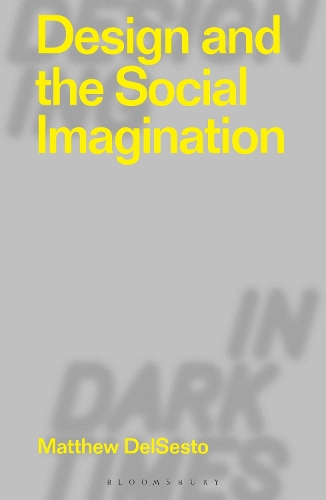
Matthew DelSesto provides a compelling blueprint for how design and designing can learn from social theory in order to address today's social, political and environmental challenges.
How can social theory help us all design solutions to address the social, political and ecological challenges that confront us, and build more sustainable communities?
Design professions have typically been associated with intervention and action, while social science has long been associated with thought and reflection. Design and social thought are too frequently considered distinct in terms of how theories can be applied in practice. Design and the Social Imagination brings together the creative, action-oriented sensibility of design with the reflective, analytical capacities of the social sciences to offer models, ideas and strategies for shaping the future of the world we live in.
In a world of global economic inequality, racism, and environmental degradation, designing with an understanding of our social reality is increasingly crucial to our survival. Matthew DelSesto explores current practices and discourses in areas of urban design, design for social innovation, environmental design, co-design, service design, and more, illustrating how thoughtful design can contribute in a more productive way. Drawing on a range of theory and practice from radical social thinkers C. Wright Mills, Patrick Geddes, Jane Addams and W. E. B. Du Bois, his book shows us how design and the social sciences can interact in order to intervene in the crises we face today.
"Design and the Social Imagination is distinctive among current explorations of design for social innovation, design justice, and systems change literature because it explores a novel historical conjunction. ... DelSesto has provided a crucial nudge that opens the door, now it is time to enter, deepen our understanding of this landscape by continuing to engage history in reflection and following DelSestos’s signposts to both read and contribute to the contemporary design conversation. As he concludes, “the work is unfinished and awaits your participation” (177)" - Design and Culture