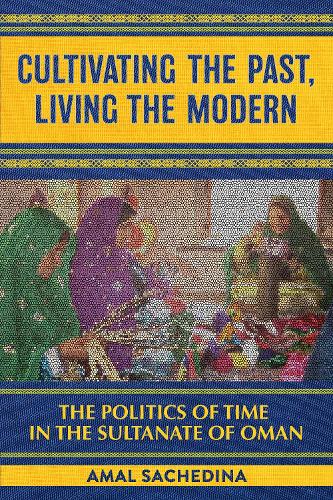
Cultivating the Past, Living the Modern explores how and why heritage has emerged as a prevalent force in building the modern nation state of Oman. Amal Sachedina analyses the relations with the past that undergird the shift in Oman from an Ibadi shari'a Imamate (1913–1958) to a modern nation state from 1970 onwards.
Since its inception as a nation state, material forms in the Sultanate of Oman—such as old mosques and shari'a manuscripts, restored forts, national symbols such as the coffee pot or the dagger (khanjar), and archaeological sites—have saturated the landscape, becoming increasingly ubiquitous as part of a standardized public and visual memorialization of the past. Oman's expanding heritage industry, exemplified by the boom in museums, exhibitions, street montages, and cultural festivals, shapes a distinctly national geography and territorialized narrative.
But Cultivating the Past, Living the Modern demonstrates there are consequences to this celebration of heritage. As the national narrative conditions the way people ethically work on themselves through evoking forms of heritage, it also generates anxieties and emotional sensibilities that seek to address the erasures and occlusions of the past.
"
Particularly compelling is the book's attention to the ways the shift from premodern forms of governance premised upon certain kinds of Islamic ethical practice and engagement with the divine are reworked through this transition, with consequences for the social, political, and material worlds premised on these relations. This book offers many important insights, making it an excellent contribution to the anthropologies of Islam and the Middle East, the history of the Arabian Gulf, and critical scholarly perspectives on material heritage practices.
" - Choice
"
This work, in its ethnographic and historical materials, is a much-needed addition to the small body of literature focused on contemporary life and statecraft in Oman.
" - Journal of the Royal Anthropological Institute