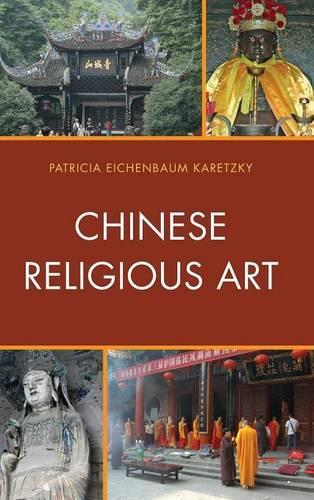
Книга Chinese Religious Art
Chinese Religious Art is a broad survey of the origins and development of the various forms of artistic expression of Chinese religions. The study begins with an overview of ancient archaeology in order to identify nascent religious ideologies in various Neolithic Cultures and early Chinese historical eras including the Shang dynasty (1300-1050 BCE) and Zhou Dynasty(1000-221 BCE) up until the era of the First Emperor (221-210 BCE) Part Two treats Confucianism as a religious tradition examining its scriptures, images, temples and rituals. Adopted as the state ideology in the Han dynasty, Confucian ideas permeated society for over two thousand years. Filial piety, ethical behavior and other principles shaped the pictorial arts. Part Three considers the various schools of Daoist belief and their expression in art. The ideas of a utopian society and the pursuit of immortality characterize this religion from its earliest phase. Daoism has an elaborate pantheon and ritualistic art, as well as a secular tradition best expressed in monochrome ink painting. Part Four covers the development of Buddhist art beginning with its entry into China in the second century. Its monuments—comprised largely of cave temples carved high in the mountains along the frontiers of China and large metropolitan temples —provide evidence of its evolution including the adoption of savior cults of the Buddha of the Western Paradise, the Buddha of the Future, the rise of Ch’an (Zen) and esoteric Buddhism. In their development, these various religious traditions interacted, sharing art, architecture, iconography and rituals. By the twelfth century a stage of syncretism merged all three traditions into a popular religion. All the religions are reviving after their extirpation during the Cultural Revolution. Using historical records and artistic evidence, much of which has not been published, this study examines their individual and shared manner of worshipping the divine forces.
"Chinese Religious Art is the first single volume to treat Confucian, Daoist, and Buddhist traditions of art in China. This is a substantial undertaking by Karetzky. Her book–slim in size relative to the parameters of her study–introduces general readers and new students to a sweeping range of art and architecture from the Neolithic to the late imperial periods. Coverage is a major strength, allowing students to readily perceive both common expressions and dramatic distinctions among the arts of China's major religions. . . .Summing Up: Recommended. Lower- and upper-level undergraduates; general readers." - CHOICE
"It seems hard to believe that there has not been a volume prior to this one devoted to Chinese religious art, but this work by Patricia Eichenbaum Karetzky is the first comprehensive volume on the subject. It thus fills an important gap in literature on Asian art by providing a less-familiar lens for examining dynastic art. In this book, the Tang Dynasty, instead of being characterized by its frequent artistic symbols, tricolor horses and polo-playing women, is analyzed through objects such as Daoist and Buddhist carvings found in caves. . . . This work provides an admirably broad and deep range of information on Chinese religious art organized into a single volume, with many sources and sites included." - Education About Asia