Книга Carl Haag: Victorian Court Painter and Travelling Adventurer between Orient and Occident
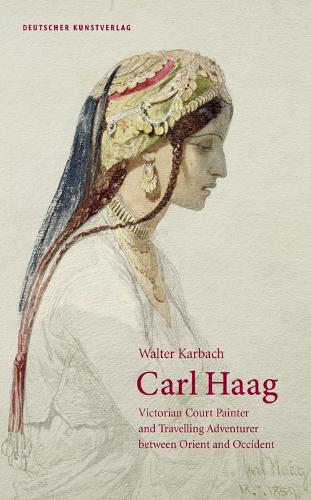
The painter Carl Haag (1820–1915) gained acclaim for his colorful scenes of the Orient and true-to-life portraits, in which Nubian slaves, Arabian camel drivers or Egyptian snake charmers enliven the visual topography. After attending art school in Nuremberg, the son of a baker advanced to become a sought-after portraitist in Munich, and later refined his art with watercolor painting in Brussels and London. As court painter to the duke of Saxe-Coburg and Gotha, he worked for Britain’s Queen Victoria. His watercolors that portray the life of the royal family in the Scottish Highlands are now part of the royal collection. Always searching for new motifs, Haag traveled extensively through Europe. In 1859 he headed to the Orient, visiting Cairo, Jerusalem, Damascus, Palmyra and Baalbek.
In this first biography about the painter, Walter Karbach conveys a vivid impression of society in the Victorian age, discussing Haag’s artistic influences, personal preferences, as well as his artist friends and patrons. At the same time, he elicits enthusiasm for Haag’s landscape sketches, portraits and drawings of ruins, which oscillate between documentary representations and romantic or idealized scenic views.
The painter Carl Haag (1820–1915) gained acclaim for his colorful scenes of the Orient and true-to-life portraits, in which Nubian slaves, Arabian camel drivers or Egyptian snake charmers enliven the visual topography. After attending art school in Nuremberg, the son of a baker advanced to become a sought-after portraitist in Munich, and later refined his art with watercolor painting in Brussels and London. As court painter to the duke of Saxe-Coburg and Gotha, he worked for Britain’s Queen Victoria. His watercolors that portray the life of the royal family in the Scottish Highlands are now part of the royal collection. Always searching for new motifs, Haag traveled extensively through Europe. In 1859 he headed to the Orient, visiting Cairo, Jerusalem, Damascus, Palmyra and Baalbek.
In this first biography about the painter, Walter Karbach conveys a vivid impression of society in the Victorian age, discussing Haag’s artistic influences, personal preferences, as well as his artist friends and patrons. At the same time, he elicits enthusiasm for Haag’s landscape sketches, portraits and drawings of ruins, which oscillate between documentary representations and romantic or idealized scenic views.
The painter Carl Haag (1820–1915) gained acclaim for his colorful scenes of the Orient and true-to-life portraits, in which Nubian slaves, Arabian camel drivers or Egyptian snake charmers enliven the visual topography. After attending art school in Nuremberg, the son of a baker advanced to become a sought-after portraitist in Munich, and later refined his art with watercolor painting in Brussels and London. As court painter to the duke of Saxe-Coburg and Gotha, he worked for Britain’s Queen Victoria. His watercolors that portray the life of the royal family in the Scottish Highlands are now part of the royal collection. Always searching for new motifs, Haag traveled extensively through Europe. In 1859 he headed to the Orient, visiting Cairo, Jerusalem, Damascus, Palmyra and Baalbek.
In this first biography about the painter, Walter Karbach conveys a vivid impression of society in the Victorian age, discussing Haag’s artistic influences, personal preferences, as well as his artist friends and patrons. At the same time, he elicits enthusiasm for Haag’s landscape sketches, portraits and drawings of ruins, which oscillate between documentary representations and romantic or idealized scenic views.