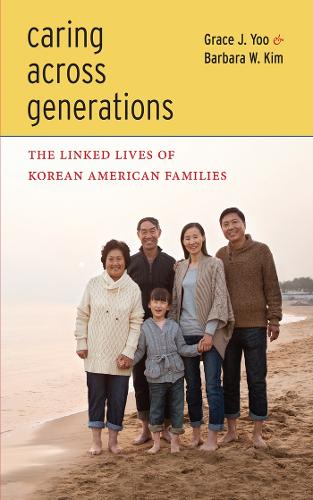
Книга Caring Across Generations: The Linked Lives of Korean American Families
More than 1.3 million Korean Americans live in the United States, the majority of them foreign-born immigrants and their children, the so-called 1.5 and second generations. While many sons and daughters of Korean immigrants outwardly conform to the stereotyped image of the upwardly mobile, highly educated super-achiever, the realities and challenges that the children of Korean immigrants face in their adult lives as
their immigrant parents grow older and confront health issues that are far more complex. In Caring Across Generations, Grace J. Yoo and Barbara W. Kim explore how earlier experiences helping immigrant parents navigate American society have prepared Korean American children for negotiating and redefining the traditional gender norms, close familial relationships, and cultural practices that their parents expect them to adhere to as they reach adulthood. Drawing on in-depth interviews with 137 second and 1.5 generation Korean Americans, Yoo & Kim explore issues such as their childhood experiences, their interpreted cultural traditions and values in regards to care and respect for the elderly, their attitudes and values regarding care for aging parents, their observations of parents facing retirement and life changes, and their experiences with providing care when parents face illness or the prospects of dying.
A unique study at the intersection of immigration and aging, Caring Across Generations provides a new look at the linked lives of immigrants and their families, and the struggles and triumphs that they face over many generations.
"This well-written, sensitive work provides insight into the family lives of one of the largest Asian American groups." - Choice
"[] [T]his is an interesting, empirically rich book. It will be a valuable addition for students of immigration, family and household, race and ethnicity, culture, social work/welfare, and life course analysis." - Society
"How do children of immigrants take care of their parents over their life course? How do they make sense of their parents sacrifices? What cultural and filial expectations shape the meaning of such care work? This important book effectively addresses these three intricate questions while providing original insight into the complex lives of immigrants and their children." - Social Forces
"To the authors credit, they did a superb job in analyzing the interview data, painting the main themes in broad strokes while also maintaining a sharp focus on the findings implications for the second generations emotional well-beingThe portrait it renders is both compelling and surprising." - Social Forces