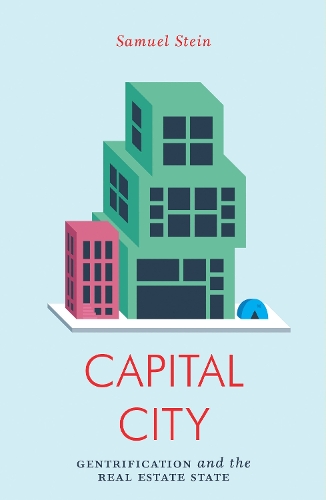
Книга Capital City: Gentrification and the Real Estate State
Gentrification isn't driven by latte sipping hipsters - it's engineered by the capitalist state
Our cities are changing. Global real estate is now a $217 trillion dollar industry, 36 times the value of all the gold ever mined. It makes up 60 percent of the world's assets, and the most powerful person in the world - the president of the United States - made his name as a landlord and real estate developer.
As Samuel Stein makes clear in this tightly argued book, its through seemingly innocuous profession of city planners that we can best understand the transformations underway. Planners provide a window into the practical dynamics of urban change: the way the state uses and is used by organized capital, and the power of landlords and developers at every level of government. But crucially, planners also possess some of the powers we must leverage if we ever wish to reclaim our cities from real estate capital.
"[Capital City] alternates a panoptic view with one that looks more closely, from the ground up, at what reckless development does to lives and livelihoods...Explicit in Stein's narrative is the idea that a different, more democratic kind of planning might lead us to more democratic kinds of cities." - The New Yorker
"Samuel Stein's Capital City: Gentrification and the Real Estate State is a radical view into the heart of the processes [urban planners] oversee" - New Labor Forum
"Capital City deserves attention from urban historians for its nuanced analysis of neoliberal urban policy and specific measures that generate inequality and may be also used in service of justice. This book will be a useful tool for a broad swath of people seeking a greater understanding of the urgency of this political moment which grows with every demolition." - The Metropole
"Vital and devastating ... [Capital City is] unabashed in its advocacy of a more equitable distribution of land and housing. ... A powerful companion to studies of the global rise of informal cities such as Mike Davis' Planet of Slums, the racist history of housing in Richard Rothstein's The Color of Law, [and] the horrid effects of losing one's home in Matthew Desmond's Evicted." - New York Labor History Association