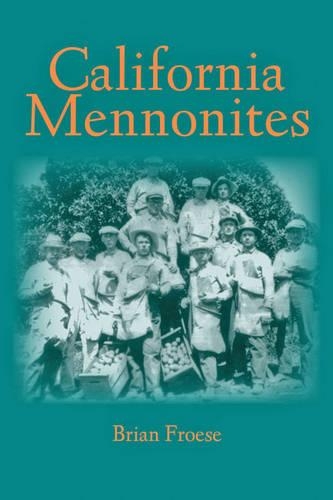
Книга California Mennonites
Brian Froese relies extensively on original source materials as he looks carefully at the diversity of Mennonite denominational experiences and adroitly evaluates the way that historic beliefs and practices were impacted by contemporary social, economic, and cultural developments on the West Coast. The first book to focus specifically on the Anabaptist experience in California-a state often associated with health spas and orange groves- California Mennonites is an important and original contribution to Mennonite studies. -- Rod Janzen, coauthor of The Hutterites in North America Creative and highly original, California Mennonites situates farmers and preachers, pacifists and professionals in the remarkably diverse social, economic, and racial contexts of the Golden State. As he explores how a sense of place shapes faith communities and how religious people engage their surroundings, Brian Froese deepens our understanding of Mennonites everywhere. -- Steven M. Nolt, co-author of The Amish and Seeking Places of Peace: A Global Mennonite History The history of Mennonites in California is unusually rich-a strong Anabaptist (and pacifist) identity taking on some features of modern evangelical Protestantism, original expertise in agriculture developing into a wide range of urban and suburban vocations, a movement rooted in Swiss and German heritage broadening out to include many new ethnicities. Brian Froese's deeply researched and clearly written study is of course a boon for Mennonites, but will also be read with real interest by students of both American religion and modern California. -- Mark Noll, Francis A. McAnaney Professor of History, University of Notre Dame
Books about Mennonites have centered primarily on the East Coast and the Midwest, where the majority of Mennonite communities in the United States are located. But these narratives neglect the unique history of the multitude of Mennonites living on the West Coast. In California Mennonites, Brian Froese relies on archival church records to examine the Mennonite experience in the Golden State, from the nineteenth-century migrants who came in search of sunshine and fertile soil to the traditionally agrarian community that struggled with issues of urbanization, race, gender, education, and labor in the twentieth century to the evangelically oriented, partially assimilated Mennonites of today. Froese places Mennonite experiences against a backdrop of major historical events, including World War II and Vietnam, and social issues, from labor disputes to the evolution of mental health care. California Mennonites include people who embrace a range of ideologies: many are historically rooted in the sixteenth-century Reformation ideals of the early Anabaptists (pacifism, congregationalism, discipleship); some embrace twentieth-century American evangelicalism (missions, Billy Graham); and others are committed to a type of social justice that involves forging practical ties to secular government programs while maintaining a quiet connection to religion. Through their experiences of religious diversity, changing demographics, and war, California Mennonites have wrestled with complicated questions of what it means to be American, Mennonite, and modern. This book - the first of its kind - will appeal to historians and religious studies scholars alike.