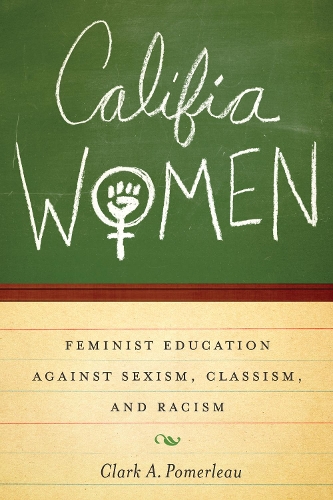
Книга Califia Women: Feminist Education against Sexism, Classism, and Racism
"Ventures into entirely new territory [and] engages the larger political landscape as no prior work on feminist activism has done." -- A. Finn Enke, Associate Professor of History at the University of Wisconsin at Madison and author of Finding the Movement: Sexuality, Contested Space, and Feminist Activism "This book is a substantial and original piece of scholarship that addresses critical issues in women's history and post-1945 history of social movements. Pomerleau's study of Califia is important for a number of reasons. Previously there were no major studies of alternative educational institutions of Second Wave feminism despite their importance in the overall network of alternative institutions-bookstores, restaurants, record companies, health centers-created by feminists of the 1970s and 1980s. Califia Women argues that radical feminism and cultural feminism operated together, blending the political radicalism of the former and the 'women's culture' of the latter. The book establishes that this type of radical movement extended well into the 1980s, a time that is often characterized as marked by a decline in radicalism, with a shift toward mainstream liberal politics such as the campaign for the Equal Rights Amendment. Finally, Califia Women offers a nuanced study of the tensions within feminism around race and class. Most important, Pomerleau succeeds in doing something few scholars have done: he makes radical lesbian feminism accessible to both scholars and students alike." -- Susan Cahn, Professor of History, SUNY Buffalo, and author of Sexual Reckonings: Southern Girls in a Troubling Age
Launched in 1975, the Califia Community organized activist educational camps and other programs in southern California until its dissolution in 1987. An alternative to mainstream academia’s attempts to tie feminism to university courses, Califia blended aspects of feminism that spanned the labels “second wave” and “radical,” attracting women from a range of gender expressions, sexual orientations, class backgrounds, and races or ethnicities. Califia Women captures the history of the organization through oral history interviews, archives, and other forms of primary research. The result is a lens for re-reading trends in feminist and social justice activism of the time period, contextualized against a growing conservative backlash.
Throughout each chapter, readers learn about the triumphs and frictions feminists encountered as they attempted to build on the achievements of the postwar Civil Rights movement. With its backdrop of southern California, the book emphasizes a region that has often been overlooked in studies of East Coast or San Francisco Bay–area activism. Califia Women also counters the notions that radical and lesbian feminists were unwilling to address intersectional identities generally and that they withdrew from political activism after 1975. Instead, the Califia Community shows evidence that these and other feminists intentionally created an educational forum that embraced oppositional consciousness and sought to serve a variety of women, including radical Christian reformers, Wiccans, scholars of color, and GLBT activists.