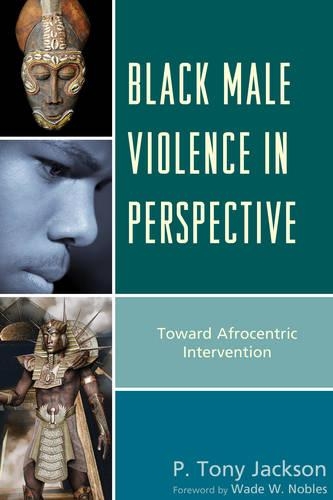
Книга Black Male Violence in Perspective: Toward Afrocentric Intervention
Black Male Violence in Perspective: Towards Afrocentric Intervention represents a synthesis of lived experience, authoritative research, and Afro-centric perspective on one of the most controversial topics of our day. It examines violence by and among Black men, as it is inextricably tied to its context; the history of violence in America including colonialism, expansionism, and concepts of manifest destiny. Acknowledging important concepts like Michelle Alexander’s “The New Jim Crow” and Joy DeGruy-Leary’s “Post Traumatic Stress Syndrome,” and chronicling the devastating and injurious effects of racism, the text moves in a clinical direction. It identifies and addresses the resulting dangerous triad of frustration, anger, and depression and how they come together clinically to impact young Black men resulting in violent outcomes. It explores the psychology underlying violent behavior, delving into the socioeconomic realities that are very much a part of the landscape of violence in America. Tony Jackson utilizes cases from his career as a therapist as well as examples from actual life experience to illustrate challenging concepts. More importantly, Black Male Violence in Perspective proposes a theory of intervention and treatment with a discussion on quantitative and qualitative research methods.
"An accomplished clinical psychologist and professor at Skyline College, P. Tony Jackson provides readers with an understanding of the causal mechanism of black male violence and presents research findings that provide evidence for the promise of using Afrocentric models to address the issue of violence among young black men. Jackson describes the historical context of violence within the black community among largely black young men, and how American society historically has nurtured the violence both suffered and committed by black men, while at the same time openly condemning the very violence it has created. . . .[T]his book is excellent for anyone serious about gaining an in-depth understanding of the issue of black male violence. Social workers can benefit from this book in terms of understanding the problem of blackon- black violence among young black males in an effort to find pragmatic solutions." - The Journal of Sociology & Social Welfare