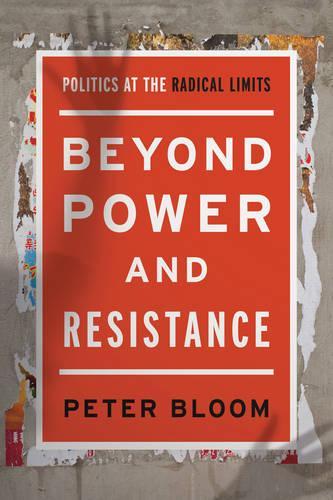
Книга Beyond Power and Resistance: Politics at the Radical Limits
Has political resistance has lost its ability to confront political and economic power and achieve social change? Despite its best intentions, resistance has often become incorporated and neutered before it achieves its aims, as new forms of power absorb it and turn it towards their own ends. Since the Enlightenment, the opposing forces of power and resistance have framed our view of society and politics. Exploring that development, this book shows how resistance can, ironically, reinforce existing status quos and fundamentally strengthen capitalist and colonial desires for “sovereignty” and “domination”. It highlights, therefore, the urgent need for new critical perspectives that breaks free from this imprisoning modern history. In this spirit, this book seeks to theorize the radical potential for a post-resistance existence and politics. One that exchanges a permanent revolution against authority with the discovery of novel forms of agency, social relations and the self that are currently lacking. That aims to construct economic and social systems based not on the possibility of freedom but enlarging the freedom of possibility. In the 21st century can we move beyond power and resistance to a politics at the radical limits that eternally expands what is socially possible?
"Bloom offers a postmodern attempt to revise the power and resistance paradigm fundamental to Western political thought. The first chapter summarizes the focus of his effort. The author follows with a history of power and resistance, basically as concepts, or accepted motifs. Chapter 3 reviews in standard fashion the development of modern Western political ideas, emphasizing the emergence of resistance as a recurring form of political action. Bloom next moves beyond modernism with his contention that Enlightenment rationalism has often devolved into myth and fantasy. Chapter 5 depicts capitalism as a hindrance to the potential for a broader concept of resistance. But the author then argues that modern forms of organization and technology enable new types of resistance that may weaken traditional structures of power. Chapter 7 features the use of Derrida and Foucault as harbingers of possibilities beyond traditional views of power and resistance. The concluding chapter urges a rethinking of the “notion of freedom” that moves this idea from simply a basis for resistance toward a positive source of opportunities. Bloom illustrates how postmodern interpretation could temper the hegemonic status of key political concepts. Summing Up: Recommended. Faculty only." - CHOICE