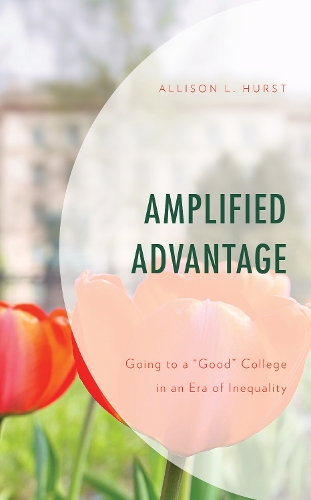
Книга Amplified Advantage: Going to a “Good” College in an Era of Inequality
Amplified Advantage investigates the value and impact of today’s small liberal arts colleges through an extended examination of a recent cohort of students attending them. It demonstrates how these colleges sometimes succeed and sometimes fail in equalizing the experience of all their students. But there is more to the book than that. Although primarily an account of life and learning at small liberal arts colleges in the US today, scholars will find much of theoretical interest underlying the account. The context of the small liberal arts college is used to unpack how class works. Unlike many other books written about class in college, Amplified Advantage is not exclusively focused on how some students fare less well than their peers, but rather how all students’ strategies are affected by their past experiences and classed expectations, particularly in the context of growing inequality. Amplified Advantage draws on Bourdieu’s theory of class, particularly his concepts of capitals operating in a field, and habitus as way of understanding agent’s structured but generative choices, to demonstrate how inequalities are met, resisted, and ultimately reproduced across generations. Chapter by chapter, the book lays out the many ways that class continues to play a role in the college experience, from choosing a major, to frequency of faculty interaction, to participation in the extra-curriculum. The last chapters demonstrate the differential burden of debt on graduates and the impact of varied parental support after graduation. Amplified Advantages adds to our understanding of how class works, the impact of parents and families on social reproduction, and the ways that colleges and universities can contribute to or reduce inequalities.
"
Hurst (sociology, Oregon State Univ.) examines whether small liberal arts colleges (SLACs) amplify or ameliorate preexisting class disparities. To illustrate the impact class has on student outcomes and experiences, the author uses surveys, observations, and interview data collected from students at several SLACs. She employs central concepts of Pierre Bourdieu’s theory on class, such as capital and habitus, to frame the results of her study. Through stories and thick description, Hurst unpacks the complexity of how social class influences students’ strategies, such as what they choose to study and what they do after graduation. This research shows that SLACs offer an invaluable education to students of all social classes, but ultimately students from economically privileged backgrounds fare better than their peers despite having similar curricular and extracurricular experiences. Although the tone and style of this book are appropriate for academics, general audiences may also find the text appealing and highly readable. . . Hurst’s well-researched book is insightful and should be read by students, faculty, and college administrators. Summing Up: Recommended. General readers, upper-division undergraduates through faculty, and professionals.
" - CHOICE