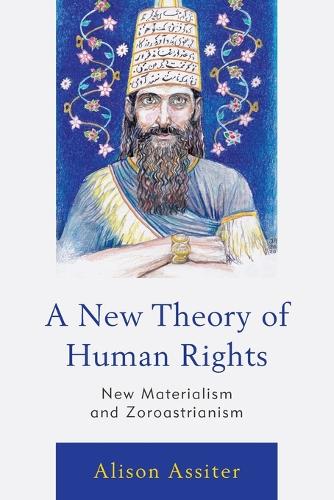
Книга A New Theory of Human Rights: New Materialism and Zoroastrianism
This book offers a new materialist thesis that focuses on the dynamic biological core of humans, shared with other animals and the rest of the natural world, to develop a radical theory of human rights. It therefore makes a unique contribution to literature and to academic and societal debates both on new materialisms and on human rights.
Many on the political far right deride the concept of a human right. This has occurred in tandem with a growing contempt for the rule of law and for obligations to protect land or the environment, to recognize the rights of minorities, or even to respect the various mechanisms of democracy. On the other hand, ccontemporary ‘left-wing’ inspired literature has also rejected the concept of a human right as Enlightenment inspired and 'western’. This has gone hand in hand with a contestation of ‘essentialism’ and ‘universalism'. These theoretical positions have been variously critiqued as racist, sexist as well as Eurocentric.
Drawing on metaphysics and ethics, with protagonists drawn from traditions across analytic and continental philosophy and feminist theory, Assiter challenges these critics to form a distinctive new materialist position. Most people – defenders and critics - take for granted that the concept of human rights and the universal view of humanity derive from the European Enlightenment. However, this book develops a different story of its origin, from the earlier period of both Aristotle and the Zoroastrian Persian Empire, and locates the concept of a right partly in our biological core, yet challenges the assumption that this is constructed by language of any kind specifically including scientific discourse.
"
In this volume, Assiter provides a defense of the concept of human rights based on her understanding of realist materialism, which dictates an independent physical world within which humans live, and a version of essentialism that constructs the objective, non-socially created conditions of life.... In contrast to common conception of rights emerging out of Enlightenment-era European philosophy, Assiter argues that rights instead emerge out of the conditions and components of life…. In laying out her position, Assiter engages with historical figures such as Immanuel Kant, Søren Kierkegaard, and Charles Darwin, as well as contemporary thinkers, both Western, like Jane Bennett, and non-Western, like Saba Mahmood. While the book is academically sophisticated and rigorous, the writing is accessible to readers with relevant background knowledge. Recommended.”
" - Choice Reviews