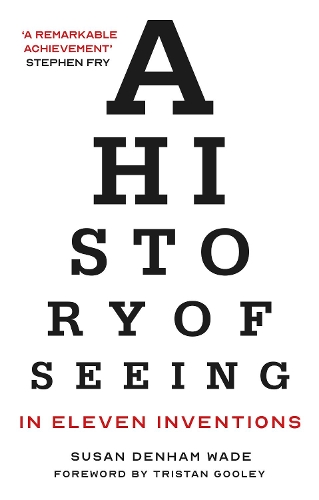
Книга A History of Seeing in Eleven Inventions
Eyes were one of the very first body parts to evolve more than 500 million years ago, and their structure has remained virtually unchanged through most of evolutionary history. But eyes alone were never enough for Homo sapiens. From the mastery of fire a million years ago to the smartphone today, humans have repeatedly invented new ways to see their surroundings, each other and themselves. Artificial light, art, mirrors, writing, lenses, printing, photography, film, television, smartphones – these tools didn’t just add to our visual repertoire, they shaped cultures around the world and made us who we are. Drawing on sources from anthropology to zoology, neuroscience to Netflix, As Far As the Eye Can See traces the history of seeing from the first evolutionary stirrings of sight and discovers that each time we changed how or what we see, we changed ourselves and the world around us. Along the way, it finds, sight slowly eclipsed our other senses. Are we now at ‘peak seeing’, the author asks. Can our eyes keep up with technology? Have we gone as far as the eye can see?
In 2015 #thedress captured the world’s imagination. Was the dress in the picture white and gold or blue and black? It inspired the author to ask: if people in the same time and place can see the same thing differently, how did people in distant times and places see the world?
Jam-packed with fascinating stories, facts and insights and impeccably researched, A History of Seeing in Eleven Inventions investigates the story of seeing from the evolution of eyes 500 million years ago to the present day. Time after time, it reveals, inventions that changed how people saw the world ended up changing it altogether.
Twenty-first-century life is more visual than ever, and seeing overwhelmingly dominates our senses. Can our eyes keep up with technology? Have we gone as far as the eye can see?
'A remarkable achievement' - Stephen Fry
In 2015 #thedress captured the world’s imagination. Was the dress in the picture white and gold or blue and black? It inspired the author to ask: if people in the same time and place can see the same thing differently, how did people in distant times and places see the world?
Jam-packed with fascinating stories, facts and insights and impeccably researched, A History of Seeing in Eleven Inventions investigates the story of seeing from the evolution of eyes 500 million years ago to the present day. Time after time, it reveals, inventions that changed how people saw the world ended up changing it altogether.
Twenty-first-century life is more visual than ever, and seeing overwhelmingly dominates our senses. Can our eyes keep up with technology? Have we gone as far as the eye can see?