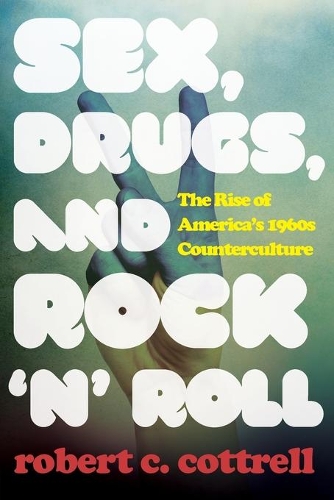
Книга Sex, Drugs, and Rock 'n' Roll: The Rise of America’s 1960s Counterculture
Sex, Drugs, and Rock ‘n Roll: The American Counterculture of the 1960s offers a unique examination of the cultural flowering that enveloped the United States during that early postwar decade. Robert C. Cottrell provides an enthralling view of the counterculture, beginning with an examination of American bohemia, the Lyrical Left of the pre-WWII era, and the hipsters. He delves into the Beats, before analyzing the counterculture that emerged on both the East and West coasts, but soon cropped up in the American heartland as well. Cottrell delivers something of a collective biography, through an exploration of the antics of seminal countercultural figures Allen Ginsberg, Jack Kerouac, Timothy Leary, and Ken Kesey. Cottrell also presents fascinating chapters covering “the magic elixir of sex,” rock ‘n roll, the underground press, Haight-Ashbury, the literature that garnered the attention of many in the counterculture, Monterey Pop, the Summer of Love, the Death of Hippie, the March on the Pentagon, communes, Yippies, Weatherman, Woodstock, the Manson family, the women’s movement, and the decade’s legacies.
"This massive and impressively researched look at the cultural revolutions in the U.S. in the post-WWII years is a perfect text for a college class on 1960s culture. Fully aware that 'the hippies of the 1960s, of course, were hardly the first countercultural figures to appear in the United States,' Cottrell (Icons of American Popular Culture) begins with detailed looks at four early seminal countercultural figures: Allen Ginsberg, whose poetry attacked the 'conservatism and conformity' of American 1950s culture; Jack Kerouac, whose novel 'On The Road' popularized the youthful image of 'the restless wanderer;' Timothy Leary, the most notable proselytizer for LSD; and author Ken Kesey, whose Merry Prankster commune 'kicked off the liberal employment of psychedelics.' Cottrell expertly shows how their outlaw images and ideas influenced almost every aspect of the 1960s counterculture: the political shift from traditional protest to the violence of the Weathermen; the popularization of the use of psychedelics for personal liberation; and the move from cities into country communes as an escape from the collapsing countercultural ideals in the 1970s. Cottrell believes that the positive aspects of Sixties culture live on, quoting Whole Earth Catalog editor Stewart Brand’s belief that 'the counterculture’s scorn for centralized authority provided the philosophical foundations of not only the leaderless Internet but also the entire personal-computer revolution.'" - Publishers Weekly
"Cottrell begins this fine narrative of 1960s counterculture with a detailed examination of four 'godfathers' of the movement: Jack Kerouac, Allen Ginsberg, Timothy Leary, and Ken Kesey. He argues that the Beats, Leary’s LSD experimentation and promotion, and Kesey’s Merry Pranksters provided the foundation of the counterculture. Relying on secondary literature contemporary to the era, Cottrell traces the various threads of the counterculture with a critical eye, emphasizing the music, literature, and politics that both shaped and reflected the prevalent ideas of the 1960s. This is no nostalgic tour; Cottrell also treats the underside of the 1960s, reflecting on the drug-ridden demise of Haight-Ashbury, the violence at Altamont, and the rise of radical groups such as the Weathermen. Yet the author strives for objectivity by treating the counterculture on its own terms and considering the music young people listened to, the books they read, and what they did. Ultimately, he concludes that the counterculture cannot be dismissed as ephemeral—its impact on the generation of baby boomers was significant. Or, as Cottrell suggests by quoting Charles Dickens, 'It was the best of times, it was the worst of times. ...' Summing Up: Highly recommended. All levels/libraries." - CHOICE