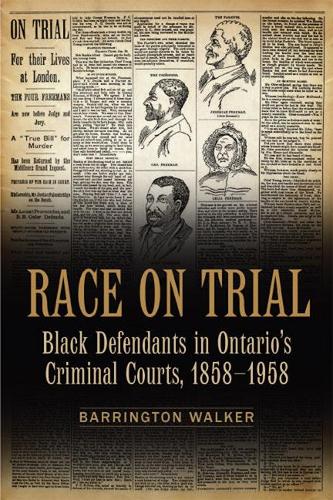
'Race on Trial is a cutting-edge work, intertwining issues of blackness with the creation of a dominant Canadian nationhood. Barrington Walker effectively relates legal history to ideas of Black masculinity, patriarchy, and gender-topics that are not touched upon nearly enough in African Canadian history.' -- Harvey Amani Whitfield, Department of History, University of Vermont
While slavery in Canada was abolished in 1834, discrimination remained. Race on Trial contrasts formal legal equality with pervasive patterns of social, legal, and attitudinal inequality in Ontario by documenting the history of black Ontarians who appeared before the criminal courts from the mid-nineteenth to the mid-twentieth centuries.
Using capital case files and the assize records for Kent and Essex counties, areas that had significant black populations because they were termini for the Underground Railroad, Barrington Walker investigates the limits of freedom for Ontario's African Canadians. Through court transcripts, depositions, jail records, Judge's Bench Books, newspapers, and government correspondence, Walker identifies trends in charges and convictions in the Black population. This exploration of the complex and often contradictory web of racial attitudes and the values of white legal elites not only exposes how blackness was articulated in Canadian law but also offers a rare glimpse of black life as experienced in Canada's past.
"‘Walker has written a well-researched, insightful, and compelling study of how race and nation was articulated, contested, and negotiated through Ontario’s courts and the trials of Black defendants.’" - Labour/Le Travail vol 72:2013