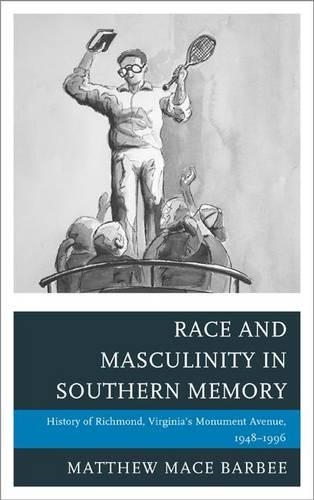
Книга Race and Masculinity in Southern Memory: History of Richmond, Virginia’s Monument Avenue, 1948–1996
In Race and Masculinity in Southern Memory Matthew Mace Barbee explores the long history of Richmond, Virginia’s iconic Monument Avenue. As a network of important memorials to Confederate leaders located in the former capitol of the Confederacy, Monument Avenue has long been central to the formation of public memory in Virginia and the U.S. South. It has also been a site of multiple controversies over what, who, and how Richmond’s past should be commemorated. This book traces the evolution of Monument Avenue by analyzing public discussions of its memorials and their meaning. It pays close attention to the origins of Monument Avenue and the first statues erected there, including memorials to Robert E. Lee and Jefferson Davis. Barbee provides a detailed and focused analysis of the evolution of Monument Avenue and public memory in Richmond from 1948 to 1996 through the Civil Rights Movement and the Civil War Centennial, and up to the memorial to Arthur Ashe erected in 1996. An African-American native of Richmond, Ashe was an international tennis champion and advocate for human rights. The story of how a monument to him ended up in a space previously reserved for statues of Confederate leaders helps us understand the ways Richmond has grappled with its past, especially the histories of slavery, Jim Crow, and Civil Rights.
"Barbee provides a detailed and thoughtful account of struggles over public memory in the civil rights era. Indeed, for many of the events examined, his is the most thorough investigation to date. . . .Race and Masculinity in Southern Memory makes important contributions to the study of historical commemoration in the recent South." - Virginia Magazine of History and Biography
"Barbee lays the foundation for a thorough analysis of the debate over the installation of the Ashe monument. Barbee analyzes this debate well. . . . Barbee is convincing in his argument that the direct, racist power of the monuments has waned and that despite the efforts of neo-Confederates, the Lost Cause ideology that gave birth to Monument Avenue has become a residual culture. . . .[This] case study is an important and suggestive framework for scholars." - Journal of Southern History