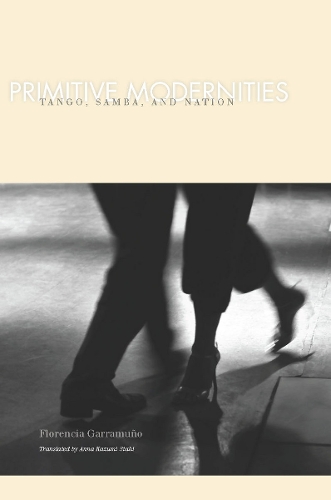
Книга Primitive Modernities: Tango, Samba, and Nation
Primitive Modernities invites us to reconsider the boundaries that usually separate popular culture from the culture of the elite. It focuses on the cultural network that enabled popular music—tango and samba—to transform into national and modern forms. The origin of tango and samba is considered primitive, marginal. Yet in the early decades of the twentieth century, they each came to symbolize a nation: Argentina and Brazil, respectively. Garramuño analyzes the aesthetic and ideological processes that enabled this transformation.Starting with the late nineteenth century, the author traces the changing meanings of the "primitive" in art, from savage and exotic to being linked to the modern. She considers not only music, but also painting, poetry, novels, essays, and films. Indeed, Garramuño understands culture as fundamentally a space of differences. In this sense, the book is also a reconsideration of the field of comparativism and of Brazil's place in Latin American Studies.
"Primitive Modernities: Tango, Samba, and Nation is a welcome tool for students without access to those languages in such fields as Brazilian and Latin American cultural studies, ethnomusicology, and literature; it is also an intriguing read for scholars of nationalisms more generally. The interdisciplinary nature of Garramuño's work is unusual in the context of regional or national studies, and provides a good example of why we should examine any cultural object as part of an intense interactive process. Primitive Modernities is all the more rare for its focus on two types of music from two national traditions that share many features, though not a common language. One of the strongest features of this study, then, is its revelation of how modernizing efforts in Latin America involving popular music superseded geographic, linguistic, disciplinary, and even sonic boundaries." - H-Net
"This intelligent and richly argued book traces how Argentina and Brazil's national music became national in the early decades of the twentieth century. It studies the nationalization of tango and samba in the context of peripheral modernities that grapple with the tensions between the longing for modernity and the need for differentiation, construed as either primitivism or exoticism." - Harvard University