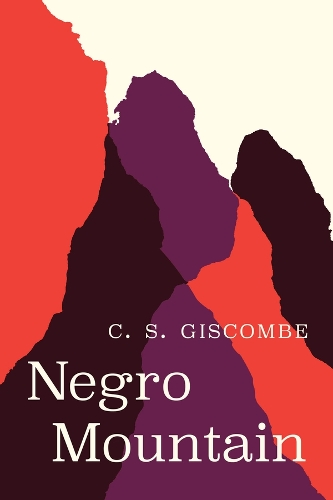
Книга Negro Mountain
A cross-genre poetry collection that troubles the idea of poetic voice while considering history, biology, the shamanistic, and the shapes of racial memory.
In the final section of Negro Mountain, C. S. Giscombe writes, “Negro Mountain—the summit of which is the highest point in Pennsylvania—is a default, a way among others to think about the Commonwealth.” Named for an “incident” in which a Black man was killed while fighting on the side of white enslavers against Indigenous peoples in the eighteenth century, this mountain has a shadow presence throughout this collection; it appears, often indirectly, in accounts of visions, reimaginings of geography, testimonies about the “natural” world, and speculations and observations about race, sexuality, and monstrosity. These poems address location, but Giscombe—who worked for ten years in central Pennsylvania—understands location to be a practice, the continual “action of situating.”
The book weaves through the ranges of thinking that poetic voice itself might trouble. Addressing a gallery of figures, Giscombe probes their impurities and ambivalences as a way of examining what languages “count” or “don’t count” as poetry. Here, he finds that the idea of poetry is visionary, but also investigatory and exploratory.
"These poems have a bardish musicality that reminds me of Nathaniel Mackey: 'there was statuary, there was / a mild nausea which, dreaming, / I’d mistaken for evil, and / also a jaguar.' Later pieces are more like essays, a combination of poetic elision and more prosaic rhetoric, block quotes and citations, gestures like 'as noted above.' The sections all comment and expand on one another, a multivocal text interrupting itself ('The mountain intervenes') with sudden shifts that unsettle and destabilize—small landslides. . . . I found it dazzling." - New York Times, on "The Best Poetry of 2023"
"[Giscombe's] journey is captivating, sardonic, entertainingly digressive, and luminous with thought, whether stopping to ponder the Black figure in Rousseau’s painting Jaguar Attacking a Negro or spinning dream tales where he becomes a white man or 'a woman in a prison camp.' . . . The lithe veracity of his writing, it turns out, is a testament to freedom—not the 'white freedom' that he imagines in a dream, but the harder-earned cognitive liberty that comes from confronting the mystery of the journey: 'Travel’s enigmatic and we don’t have to go to Negro Mountain to see that.'" - LitHub
"Through Giscombe, history speaks as a living, ongoing thread, one that attempts to work and rework bearings across an enormous sense of distance, both temporal and physical. There are dangerous shapes in those hills, some of which still work to reveal themselves, enough to cause any traveler to, through the finding, discover themselves lost." - rob mclennan's blog
"As a poet, Giscombe is in search of big game and proceeds with due caution and foresight. He often holds us at arm’s length, interposing himself, his dreaming consciousness, and his memories between reader and subject. . . . the meaning of these dully glinting utterances in Negro Mountain may be bottomless, but Giscombe is a poet who rewards patience with cunningly mapped detours through our dislocated continent." - Rain Taxi