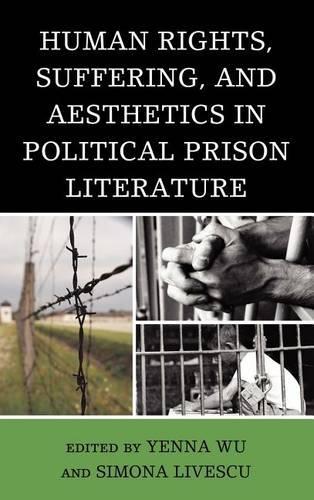
Книга Human Rights, Suffering, and Aesthetics in Political Prison Literature
This interdisciplinary volume of essays studies human rights in political prison literature, while probing the intersections of suffering, politics, and aesthetics in an interliterary and intercultural context. As the first book to explore the concept of global aesthetics in political prison narratives, it demonstrates how literary insight enhances the study of human rights. Covering varied geographical and geopolitical regions, this collection encourages comparative analyses and cross-cultural understanding. Seeking to interrogate linguistic, structural, and cultural constructions of the political prison experience, it highlights the literary aspects without losing sight of the political and the theoretical. The contributors cross various disciplinary boundaries and adopt different interpretive perspectives in analyzing prison narratives, especially memoirs, from such diverse countries as China, Egypt, Morocco, Syria, Romania, Russia, Uruguay, and the U.S. The volume emphasizes the literary works produced since the second half of the twentieth century, particularly since the political seismic shift in 1989. The authors treated range from the canonical to the less well-known: Nawal El Saadawi, Varlam Shalamov, Zhang Xianliang, Cong Weixi, Wumingshi, Carlos Liscano, Fatna El Bouih, Nabil Sulayman, Faraj Bayraqdar, Hasiba 'Abdalrahman, Tahar Ben Jelloun, Nicolae Steinhardt, Irina Ratushinskaya, etc. Critical issues investigated include how the writers represent their sufferings, experiences, and emotions during incarceration; their strategies of survival; and how political prison literature can reveal hidden violations of human rights, while resisting official discourse and serving other functions in society. Examining the commonalities and differences in global experiences of imprisonment, the eight chapters engage with the aesthetics of self-making and resistance, individual and collective memory, denial and conversion, catharsis and redemption, and the experiencing and witnessing of trauma. Topics also include the politics of remembering and the politics of representation, such as the problematic relationship between narrative, language, and representations of torture. Similarly under discussion are prison aesthetics of happiness, the role of spectacle in the criminal justice system, and the intersection of prison, gender, and silences. At a juncture when more and more people all over the world actively defy repressive regimes and demand political reform, this book makes a timely contribution to the advocacy and discourse of universal human rights.
"Interest in prisons, particularly in the US, has been increasing in the past ten years or so, but for the most part the interest has led to scholarly or popular books detailing the extent of incarceration. Works devoted to prison writing have tended to be anthologies--among the recent ones, Bell Gale's Doing Time (2011). The current volume is surprising in that Wu (comparative and Chinese literature, Univ. of California, Riverside) and Livescu (PhD candidate, UCLA) focus on the aesthetics of past and present political prison literature, from Mao's forced-labor camps to Morocco's gender-biased justice system. The "aesthetics" in general--whether marked by decentered "rhizomatous forces" (to quote Wu) or articulating a quest for freedom--is seen in relation to the central problem of the material: the inexpressibility of the political prisoner's experience. Steering clear of broad sociological theories about repression or authoritarianism, the essays have a laudable sobriety, treating prison writings as imperfect evocations of torture, attempts at resistance, and even expressions of happiness in captivity. The wide geographical scope of the volume adds to the sense of objectivity. A fascinating and welcome book. Summing Up: Highly recommended. Lower- and upper-division undergraduates; faculty; general readers." - CHOICE
"The anthology is a good basic resource on political prison narratives. Of particular interest to researchers might be the way in which the narratives in this collection share dissidence as a theme that conforms neither to the state discourse on the events that took place, nor to the clinical and documentary report format that is necessary to document human rights abuses." - Interactions: UCLA Journal of Education & Information Studies
"Yenna Wu and six distinguished authors offer analysis and perspectives on what one can learn from the writings of political prisoners. This is rich territory: the beginnings of political wisdom is seldom reached more dramatically than through the experiences of the victims of political persecution." - American Journal of Chinese Studies