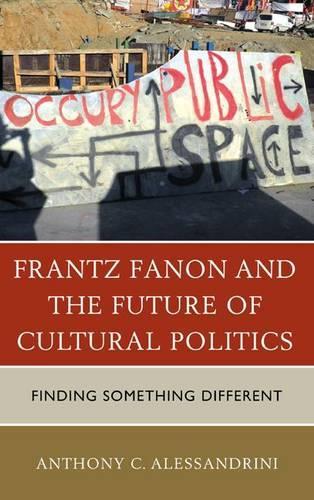
Книга Frantz Fanon and the Future of Cultural Politics: Finding Something Different
This book focuses on a reading of Frantz Fanon’s work and life, asking how the work of a revolutionary writer such as Fanon might be best appropriated for contemporary political and cultural issues. Separate chapters introduce Fanon’s life and examine the question of Fanon as our contemporary; review the field of “Fanon studies” that has grown up around his work; bring Fanon into conversation with the critical contemporary figures Edward Said, Michel Foucault, Jamaica Kincaid, and Paul Gilroy; and turn to Fanon’s work to think through the contemporary popular uprisings that have come to be known as the “Arab Spring.” The book concludes by arguing that a reevaluation of Fanon’s life and work can provide us with a particular set of lessons about solidarity—lessons that are crucial for the contemporary political struggles that face us today and that will continue to confront us in the future. Finding Something Different: Frantz Fanon and the Future of Cultural Politics is inspired by Fanon’s unsparing struggle against the depredations of racism and colonialism, and his lifelong commitment to finding something different.
"[This book] is a masterful intervention into the theorizing and contextualizing of the way in which Fanon’s work has been disseminated, appropriated and misappropriated by the Anglophone academy since English translations of his work started appearing posthumously in the late sixties. . . .Alessandrini’s comprehensive book . . . proves how the thinker [Fanon] and the field are inextricably bound together." - Journal of French and Francophone Philosophy
"Frantz Fanon and the Future of Cultural Politics: Finding Something Different is an important new book. . . .[A] remarkable work of scholarship . . . [I]t is a deep consideration of the very project of postcolonial criticism and theory." - The Committee on Globalization and Social Change
"What are we to make of Frantz Fanon today? Unlike those who would consign Fanon’s work to the dustbin of history, Anthony Alessandrini takes up this question in a series of provocative readings that show not only that Fanon’s work remains profoundly relevant from a theoretical standpoint, but also that in many ways we continue to live in the world that Fanon sought to both comprehend and transform. Fanon’s contemporary readers face both the theoretical task of reading Fanon for today and the practical task of putting his writings to work. Alessandrini’s book accomplishes its theoretical task through a series of comparative readings that stage textual encounters between Fanon’s work and that of Michel Foucault, Edward Said, Jamaica Kincaid, and Paul Gilroy. . . .Anthony Alessandrini’s book proves to be a good guide to Fanon’s writings and their contemporary relevance for scholars in a variety of fields, from Middle Eastern studies to Continental philosophy and contemporary theory. I have barely scratched the surface of Alessandrini’s book here. His theoretical engagements with contemporary theorists alone make the book a worthy read, but what really makes this book distinctive is the emphasis on the continued practical import of Fanon’s writings as provocations for us today in our task of 'finding something different.'" - SCTIW Review: Journal of the Society for Contemporary Thought and the Islamicate World