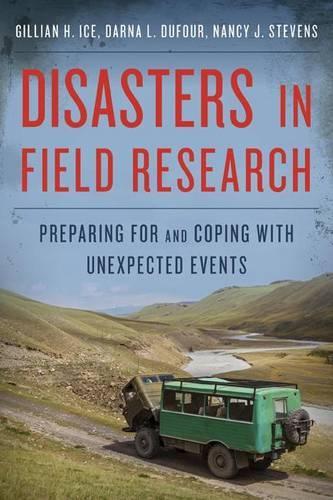
Книга Disasters in Field Research: Preparing for and Coping with Unexpected Events
From ravenous ants and temperamental gear to debilitating illness and unpredictable politics, field research can be fraught with challenges and opportunities for mishap. Disasters in Field Research is your guide to what can go wrong while conducting fieldwork—and what you can do to avoid or minimize the impact of unexpected events. Ice, Dufour, and Stevens address the issues confronting both students and professional researchers as they embark on field research. For example, permits may be difficult to obtain—or even revoked at the last minute. Cultural differences and misunderstandings can disrupt data collection. Equipment can be held up by customs—or fail to work as expected. The authors offer practical advice on preparing for such possibilities, while active researchers from a wide array of disciplines relate, in brief first-person narratives, their own encounters with disaster, how they solved (or failed to solve) the problem, and their recommendations for avoiding similar issues in the future. Each thematic chapter concludes with strategies and suggestions for making the most of your preparations, recovering from missteps, and coping with calamity. The result is an excellent companion book for field methods courses in a variety of disciplines—and an excellent companion to carry with you into the field.
"Highly engaging [and] accessible to a broad range of readers with varying degrees of fieldwork expertise. Disasters in Field Research is an indispensable primer. . . .[It sheds] light on aspects of field research that are often only discussed through anecdotes or private conversations between advisor and advisee. . . .While the target audience for the text is professional scientists, graduate, and undergraduate students, the demographic that would benefit most from this book are students in field methods courses across a range of disciplines and early-career field workers. Disasters in Field Research may also serve as an indispensable tool to guide and organize feasible and logistically-sound research proposals and would therefore make an excellent required text for courses geared toward grant writing. . . .Even the most seasoned field research can appreciate the book’s overarching sentiment that even though one can never be fully prepared for the challenges they will encounter in the field, there is virtue in being flexible, patient, having a sense of humor, and expecting the unexpected." - American Journal of Human Biology
"The topics are well chosen. The chapters are down to-earth and practical. There are dozens of useful tips on each topic. The advice is leavened with about 50 brief stories of incidents and trials in the field, contributed by several dozen field researchers invited by the authors. Getting permits, finding accommodations and transportation, getting the equipment to work in the field, health and safety issues, care and feeding of field notes and data, and working with local communities, all warrant their own chapters in this format. There are useful recommendations of other sources to read. Several chapters have checklists of things to remember. While there are three authors and many tales of the field contributed by others, the writing is seamless and very readable. . . .All in all, I wish I had read this book before my first field project. . . .[T]he practical advice makes this a worthwhile investment for grad students who are planning their first fieldwork project. Experienced researchers will also likely pick up a tip or two, enough to warrant dipping into the volume before gifting it to their favorite student." - Journal of Eastern Mediterranean Archaeology and Heritage Studies
"Disasters in Field Research: Preparing for and Coping With Unexpected Events belongs in anthropology and field research collections alike and comes form veteran field scientists who consider the many possibilities of field research disasters, from gear and illness to politics, mishaps, and disastrous experiences that sometimes held solutions and often challenged their problem-solving skills. Suggestions, strategies, and lessons learned in the field accompany descriptions of these many different kinds of disasters, resulting in a coverage that should be assigned reading for any student scientist who would embark on field research." - Midwest Book Review