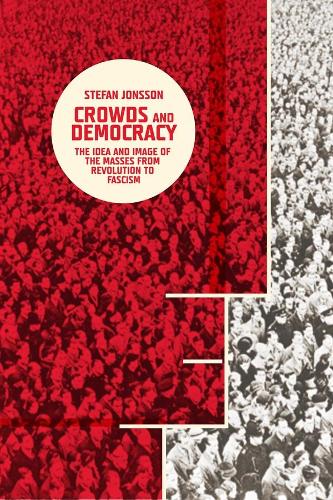
In his demonstrable command of the cross-disciplinary fund of available literatures and their respective knowledges, Jonsson's treatments effectively dissolve any meaningful boundary between literary criticism, philosophical explication, and intellectual and cultural history. -- Geoff Eley, University of Michigan In his strikingly choreographed and beautifully written study, Jonsson traverses an extensive archive, delving into novels and artworks, philosophy, historiography, and psychoanalysis. From this remarkable interdisciplinary bricolage emerges a profound set of insights into the shifting notions of the masses during the interwar years. -- Kerstin Barndt, University of Michigan
Between 1918 and 1933, the masses became a decisive preoccupation of European culture, fueling modernist movements in art, literature, architecture, theater, and cinema, as well as the rise of communism and fascism and experiments in radical democracy. Spanning aesthetics, cultural studies, intellectual history, and political theory, this volume unpacks the significance of the shadow agent known as "the mass" during a critical period in European history. It follows its evolution into the preferred conceptual tool for social scientists, the ideal slogan for politicians, and the chosen image for artists and writers trying to capture a society in flux and a people in upheaval. This volume is the second installment in Stefan Jonsson's epic study of the crowd and the mass in modern Europe, building on his work in A Brief History of the Masses, which focused on monumental artworks produced in 1789, 1889, and 1989.