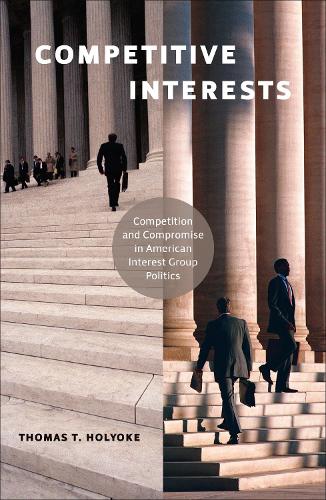
Книга Competitive Interests: Competition and Compromise in American Interest Group Politics
Holyoke's book is an innovative and robustly analytical, yet realistic, look at lobbying in the proper context-in the presence of competing lobbyists. Its carefully drawn conclusions are enlightening and important both for those who study interest group behavior and for those concerned about the effectiveness and legitimacy of American lawmaking. -- Amy McKay, Georgia State University In Competitive Interests, Thomas Holyoke shines light on an important and often misunderstood topic-interest group competition. Holyoke dissects the topic and uses new data drawn from across a variety of policy topics to produce a critical contribution to interest group scholarship. -- Susan Webb Yackee, associate professor of public affairs and political science, University of Wisconsin-Madison Thomas Holyoke has written the book on interest group competition in the United States. Theoretically driven and empirically rich, this book contributes to interest group scholarship in too many ways to count. It is an essential part of the interest group canon. -- Anthony J. Nownes, professor of political science, University of Tennessee
"Competitive Interests" does more than simply challenge the long -held belief that a small set of interests control large domains of the public policy making landscape. It shows how the explosion in the sheer number of new groups, and the broad range of ideological demands they advocate, have created a form of group politics emphasizing compromise as much as conflict. Thomas T. Holyoke offers a model of strategic lobbying that shows why some group lobbyists feel compelled to fight stronger, wealthier groups even when they know they will lose. Holyoke interviewed 83 lobbyists who have been advocates on several contentious issues, including Arctic oil drilling, environmental conservation, regulating genetically modified foods, money laundering, and bankruptcy reform. He offers answers about what kinds of policies are more likely to lead to intense competition and what kinds of interest groups have an advantage in protracted conflicts. He also discusses the negative consequences of group competition, such as legislative gridlock, and discusses what lawmakers can do to steer interest groups toward compromise. This book concludes with an exploration of greater group competition, conflict, and compromise and what consequences this could have for policymaking in a representation-based political system.