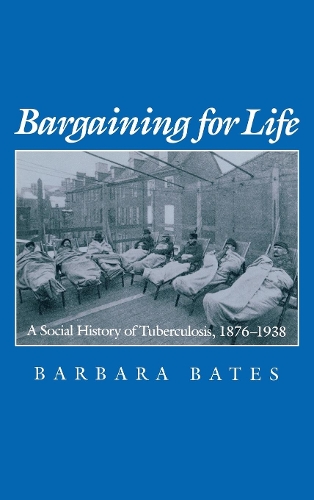
In Bargaining for Life, Barbara Bates documents the human story of tuberculosis by chronicling how men and women attempted to cope with the illness, get treatment, earn their living, and maintain social relationships.
Tuberculosis was the most common cause of death in the United States during the nineteenth century. The lingering illness devastated the lives of patients and families, and by the turn of the century, fears of infectiousness compounded their anguish. Historians have usually focused on the changing medical knowledge of tuberculosis or on the social campaigns to combat it.
Using a wide range of sources, especially the extensive correspondence of a Philadelphia physician, Lawrence F. Flick, in Bargaining for Life Barbara Bates documents the human story by chronicling how men and women attempted to cope with the illness, get treatment, earn their living, and maintain social relationships.
"Bates's book is an important contribution to the social history of disease…It will be essential for scholars in other areas of American social history as well." - Journal of American History
"A rigorous, careful study of the medical and institutional history of the disease and organized efforts against it." - Bulletin of the History of Medicine
"This important and engrossing book is a state-of-the-art example of mature social history of medicine." - Science