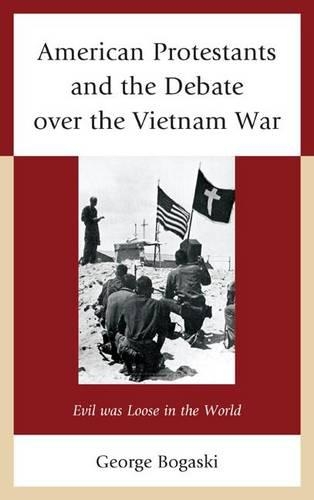
Книга American Protestants and the Debate over the Vietnam War: Evil was Loose in the World
As American soldiers fought overseas in Vietnam, American churchmen debated the legitimacy and impact of the war at home. While the justness of the war was the primary issue, they also argued over conscientious objection, the legitimacy of protests, the weapons of war, and other related topics. Divided into three primary groups—mainline, conservative evangelical, and African American—and including fourteen denominations, this book uses the churchmen’s publications and proceedings to better understand how American religion responded to and was impacted by the Vietnam War. In the various debates, churchmen brought their theological convictions and reading of the Bible to bear on their political perspectives. Convictions about sin, the nature of man, the fate of the world, violence and benevolence had direct impact upon the foreign policy perspectives of these churches. Rather than result in static political positions, these convictions adapted as the nature of the war and the likelihood of American success changed over time. The positions taken by American denominations brought about attitudes of support, opposition, and ambivalence toward the war, but also impacted the vibrancy of many churches. Some groups were rent asunder by the fractious, debilitating debate. Other churches, due to their greater ideological clarity and unanimity, saw the war provide an impetus for growth. Regardless of the individual consequences, the debate over the Vietnam War provides a concrete study of the intersection of religion and politics.
"Bogaski argues that American Protestant Christianity played two roles in the Vietnam War. On the one hand, it was 'the priest anointing the army for battle." On the other hand, it was "the prophet castigating the nation for immoral behavior.' Preexisting theological beliefs and current political realities shaped both responses to the war. The response of the mainline church, the author argues, was shaped by its previous experience with the civil rights movement and the social gospel. The conservative evangelical position was a reaction to the same two influences, as well as to the counterculture movement of the 1960s, but in a reactive, negative manner. African Americans were largely silent about the war at the start because of their greater concern with their own civil rights and economic advancement under Lyndon Johnson, but they turned against the war when Richard Nixon took office and those social programs were imperiled. Bogaski's work both builds on and has a narrower focus than David Settje's Faith and War: How Christians Debated the Cold and Vietnam Wars. Summing Up: Recommended. General and undergraduate collections." - CHOICE
"Bogaski’s extensive reading and analysis of denominational sources is a welcome addition to the growing literature on the role of religion in times of war." - The Journal Of Military History
"George Bogaski's study of Protestant denominations' responses to the Vietnam War is the latest in the recent flurry of books analyzing U.S. religious attitudes to the conflict. . . .The book builds on a solid foundation of primary-source research. . . .His work makes positive contributions to our understanding of the stances of specific denominations regarding the war." - Journal of American History
"George Bogaski wisely adopts a com parative approach in his three-part analysis of denominational statements about what is arguably the most debated military conflict in recent American history. Focusing on both polity and theology, Bogaski produces an illuminating, if also unvarnished, story of prophets, priests, and by standers. . . .[He] offers an intriguing survey of conservative mainliners who chafed at liberal activism but were not prepared to depart for evangelical pastures. . . .Bogaski goes to great lengths to be fair to conservative supporters of the Vietnam War." - The Christian Century