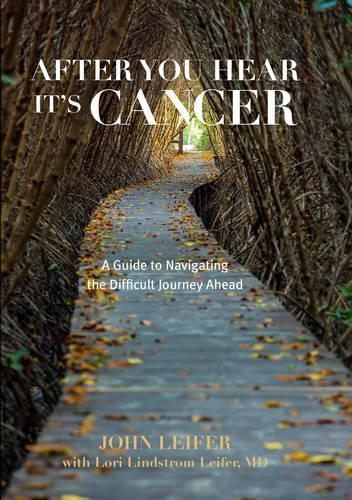
Книга After You Hear It's Cancer: A Guide to Navigating the Difficult Journey Ahead
In 2014, an estimated 1.66 million people will receive a diagnosis of cancer. They will join a pool of 13.7 million Americans already living with a history of cancer. Almost 600,000 Americans will die from cancer. For some, cancer will be only a short divergence. For others, however, it will be a dramatic fork in the road. And for still others, the beginning of the end of the line. This book guides cancer patients along their journey where no one knows the duration or the destination. Divided into the three parts of being a cancer patient—the diagnosis, initial treatment, and on to survivorship—the book will help the newly diagnosed cancer patient navigate a complex health care system, make astute decisions at difficult junctures, and manage the emotional turbulence that can rock his or her world. Lastly, it shares the story of how the author and his wife, as well as other cancer patients, have confronted their disease.
"A cancer diagnosis marks the beginning of a long, challenging journey through alien territory. Leifer, a health-care administrator and founder of the Leifer Report, has written an informative guidebook for that journey, intended to help patients 'navigate a complex health-care system, feel empowered to make astute decisions at difficult junctures, and manage the emotional turbulence along the way.' Chapters cover choosing doctors, managing pain and side effects, using complementary therapies, surviving cancer, choosing to stop treatment, death and dying, and more. Leifer focuses on information to support decision making, offering lists of questions to ask providers and quotes from research findings and patients and caregivers. He offers information that is balanced and medically sound: for example, he describes a valid role for complementary therapies while condemning quackery. . . . VERDICT Recommended for medically literate cancer patients who want to make well-informed decisions about their treatments." - Library Journal
"There were many things I appreciated about After You Hear It's Cancer, including its ability to give factual information without too much jargon and to clearly define the acronyms that are so common and confusing in health care. It is rare to find a book that speaks so clearly to such a variety of constituents, and it would have great value to health care workers, patients and families/caregivers along the whole cancer journey. . . . [E]ach chapter can stand alone and would benefit an individual wherever he or she is on the entire spectrum of dealing with cancer. . . . I think a word to describe After You Hear It's Cancer as a whole would be 'empowering.' . . . Suggestions regarding getting psychological help, either as a patient or a caregiver, are presented in a very positive manner and not as something to pursue because you are a failure in the realm of cancer care. I think the authors strike a good balance between giving information, providing encouragement and normalizing a situation that can feel out of control. I definitely want to call attention to the last part of the book — what a wealth of solid, practical information. Sources used for the book are well documented and offer credibility to the work, but perhaps even more important is that the sources can be a lifeline to more information if desired by professionals, patients and caregivers. The resource section, bibliography and index also offer many paths to in-depth information, which for some cancer patients and caregivers is an essential part of their cancer journey. After I finished reading the book, I went through the index and found the topics very helpful for reviewing some areas I found particularly informative or challenging. This book would be very appropriate in a waiting room, in a health care professional's office or to have at home as a valuable source of information. As the cancer journey continues, different topics take on added meaning — at the start, treatment options would be a priority, but later on, the information on being a survivor would be of greater value. Some cancer journeys also will require information on palliative care, hospice services and other end-of-life considerations, all of which are covered, as well. In short, everything for the cancer journey is readily available in this book — a very valuable resource indeed." - Health Progress: Journal of the Catholic Health Association of the United States
"Overall, I appreciated the meaningful intent of this book." - AMWA Journal