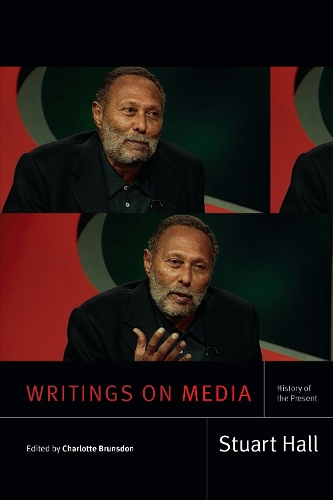
Книга Writings on Media: History of the Present
Writings on Media gathers more than twenty of Stuart Hall's media analyses, from scholarly essays such as “Encoding and Decoding in the Television Discourse” (1973) to other writings addressed to wider publics. Hall explores the practices of news photography, the development of media and cultural studies, the changing role of television, and how the nation imagines itself through popular media. He attends to Britain's imperial history and the politics of race and cultural identity as well as the media's relationship to the political project of the state. Testifying to the range and agility of Hall's critical and pedagogic engagement with contemporary media culture—and also to his collaborative mode of working—this volume reaffirms his stature as an innovative media theorist while demonstrating the continuing relevance of his methods of analysis.
"Brunsdon . . . gifts us with the evolution and contours of Hall’s thought(s) about media more broadly in work he produced mostly in the decade of the 1970s or thereabouts: about photography and the visual arts, about the press, about radio and broadcasting, and finally about television. . . What the American reader learns from this collection is this: Hall was a prescient, energetic thinker of specificity and generality at the same time. . . ." - Critical Studies in Television
"This is the true magic here: what Hall furnished for us during the course of his life, and what Brunsdon has collected and contextualized in Writings on Media, is an invitation into Hall’s world—to see the world as he did. This vision is bright eyed, and delighted, and serious, and humble. . . . In all of his prose, it is unmistakable just how much Hall absolutely wants you in it with him, and to share his questions, and to identify possible answers, and to figure it out with you. And, that is a very precious gift indeed." - College & Research Libraries
"This series is a veritable motherlode for Hall devotees and neophytes alike. . . . As Brunsdon points out, ensures that even the older or more micro-focused pieces in this volume still have ample value for current scholarship in media, film and cultural studies, and for the broader intersections around the analysis of politics, race, identity and ideological formation." - Screen