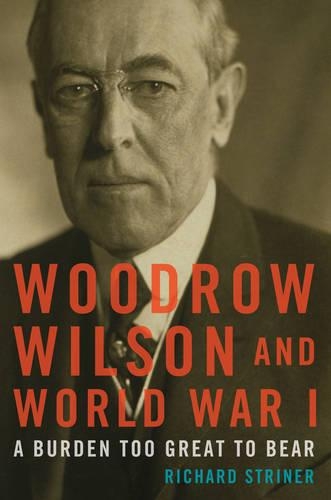
Книга Woodrow Wilson and World War I: A Burden Too Great to Bear
Woodrow Wilson is often considered one of the greatest presidents in American history because, in the first two years of his presidency, he succeeded on many fronts. However, acclaimed author and historian Richard Striner now makes the case that a presidency that is too often idealized was full of missteps and failures that profoundly affected America’s politics and people long after it ended. While other negative assessments of Wilson's leadership have been one-sided, Striner's critique—though undoubtedly scathing—is judicious, nuanced, and fair. With detailed description and accessible prose, Striner sheds light on how—as soon as America entered World War I—flaws of Wilson’s were exposed as the pressure on his administration mounted. This book is a story of presidential failure, a chronicle of Woodrow Wilson’s miscalculations in war, and a harrowing account of the process through which an intelligent American leader fell to pieces under a burden he could not bear.
"Timed to the centenary of WW I, this book offers a strongly argued and sharply focused attack on the presidential leadership of Woodrow Wilson. Using letters, speeches, diaries, and some traditional biographies. . . .it was once the staple of 'realist' thinkers about international affairs from Hans Morgenthau through Henry Kissinger. [R]arely has it been put this forcefully, or have Wilson's manifest mistakes in strategic thinking and contingency planning been so thoroughly dissected. Striner contends that from his initial 'unwise' appeal to Americans to remain 'impartial in thought' as well as neutral in action, Wilson was a 'disaster' as a wartime leader and 'dreadfully incompetent' in the peace negotiations that followed. The author occasionally mitigates the harshness of his critique by citing the possibility of various medical and psychological explanations for Wilson's behavior, and asks at the end of the book whether Wilson should be the 'object of our castigation or our pity?'. . . Striner thoroughly rejects the 'Wilson as the visionary prophet' view of Arthur Link, as well as the more sympathetic writings of Thomas Knock and John Milton Cooper. Summing Up: Recommended. All academic levels/libraries." - CHOICE