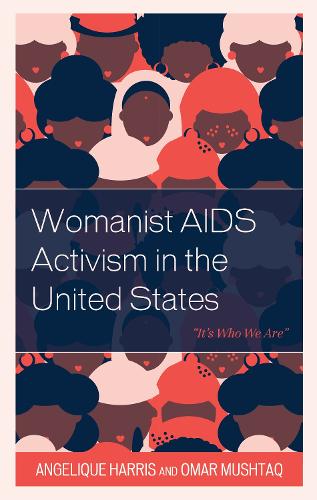
Книга Womanist AIDS Activism in the United States: “It’s Who We Are”
Womanist AIDS Activism in the United States: “It’s Who We Are” is an in-depth exploration of AIDS advocacy work among Black women. Based on interviews gathered from thirty-six Black women AIDS activists from across the nation, Angelique Harris and Omar Mushtaq examine the ways in which race, gender, sexuality, and spirituality influence the motivations and approaches behind the efforts of the women in the study. The authors use womanism—an epistemological framework that centers the world views of women of color—to better situate this activism within a larger sociocultural and historical context. They find that identity, spirituality, emotions, and experiences with AIDS knowledge all influence the ways in which these activists approached their community activism work. The authors analyze womanism in detail and propose ways in which this framework can be applied more broadly in examinations of community engagement among women of color, and specifically Black women.
"
Harris and Mushtaq are interested in one question: what drives Black women to get involved in AIDS activism? To explore this, they have used womanist theory as a grounding framework. Unlike feminism—which may overlook Black women's experiences with race; intersectionality—which could be limiting in being chiefly useful for analysis; and Black feminism—which may focus on Black womanhood only, womanist theory allows the authors to explore the critical implications of subjects' experience for social activism, especially as shown by Black women who are involved in AIDS work. This book seeks to explain Black women's activism in a multidimensional context. The authors find that Black women's self-described experiences go against the grain of what larger bodies of work have claimed about Black-led social movements… Here, the authors focus on spirituality rather than organized religion as a factor that helps drive activism. Community and agency, rather than particular monolithic leaders, have provided the motive voice spurring these women's action. This book is a gem for those seeking links between activism, public health, and social justice theory. Highly recommended. Lower- and upper-division undergraduates. Graduate students, faculty, and professionals.
" - Choice Reviews