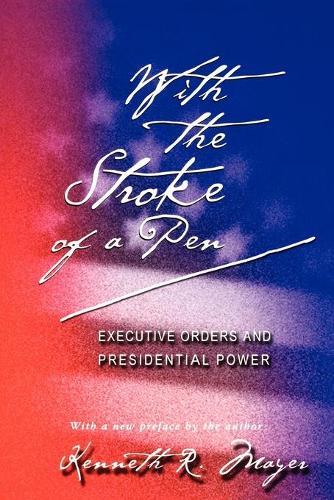
Книга With the Stroke of a Pen: Executive Orders and Presidential Power
Ken Mayer's book represents a penetrating and comprehensive examination of the president's power to issue executive orders. In what will be recognized as the authoritative work on the subject, Mayer brings a powerful and illuminating mind to an important, controversial, and, yet, understudied topic. This is an excellent work, and it will be highly regarded and widely read. -- David Gray Adler, Idaho State University This book is exceptionally well researched and presented. It contains a wealth of data and has virtually no competitors... A truly distinguished work. -- Louis Fisher, author of "American Constitutional Law"
The conventional wisdom holds that the president of the United States is weak, hobbled by the separation of powers and the short reach of his formal legal authority. In this first-ever in-depth study of executive orders, Kenneth Mayer deals a strong blow to this view. Taking civil rights and foreign policy as examples, he shows how presidents have used a key tool of executive power to wield their inherent legal authority and pursue policy without congressional interference. Throughout the nation's life, executive orders have allowed presidents to make momentous, unilateral policy choices: creating and abolishing executive branch agencies, reorganizing administrative and regulatory processes, handling emergencies, and determining how legislation is implemented. From the Louisiana Purchase to the Emancipation Proclamation, from Franklin Roosevelt's establishment of the Executive Office of the President to Bill Clinton's authorization of loan guarantees for Mexico, from Harry Truman's integration of the armed forces to Ronald Reagan's seizures of regulatory control, American presidents have used executive orders (or their equivalents) to legislate in ways that extend far beyond administrative activity. By analyzing the pattern of presidents' use of executive orders and the relationship of those orders to the presidency as an institution, Mayer describes an office much more powerful and active than the one depicted in the bulk of the political science literature. This distinguished work of scholarship shows that the U.S. presidency has a great deal more than the oft-cited "power to persuade."