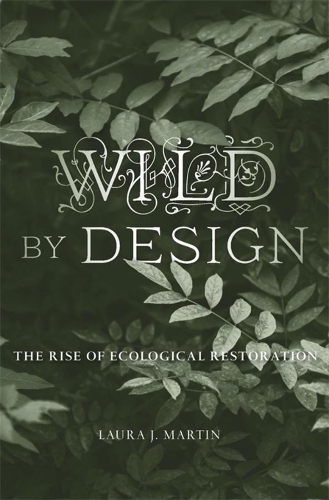
Книга Wild by Design: The Rise of Ecological Restoration
An environmental historian delves into the history, science, and philosophy of a paradoxical pursuit: the century-old quest to design natural places and create wild species.
Environmental restoration is a global pursuit and a major political concern. Governments, nonprofits, private corporations, and other institutions spend billions of dollars each year to remove invasive species, build wetlands, and reintroduce species driven from their habitats. But restoration has not always been so intensively practiced. It began as the pastime of a few wildflower enthusiasts and the first practitioners of the new scientific discipline of ecology.
Restoration has been a touchstone of US environmentalism since the beginning of the twentieth century. Diverging from popular ideas about preservation, which romanticized nature as an Eden to be left untouched by human hands, and conservation, the managed use of natural resources, restoration emerged as a “third way.” Restorationists grappled with the deepest puzzles of human care for life on earth: How to intervene in nature for nature’s own sake? What are the natural baselines that humans should aim to restore? Is it possible to design nature without destroying wildness? Laura J. Martin shows how, over time, amateur and professional ecologists, interest groups, and government agencies coalesced around a mode of environmental management that sought to respect the world-making, and even the decision-making, of other species. At the same time, restoration science reshaped material environments in ways that powerfully influenced what we understand the wild to be.
In Wild by Design, restoration’s past provides vital knowledge for climate change policy. But Martin also offers something more—a meditation on what it means to be wild and a call for ecological restoration that is socially just.
"An outstandingly well-researched and deeply thoughtful account of the way that the United States has attempted to negotiate its relationship to wild plants and animals…an essential read for anyone who wants to understand the implications of our interventions." - Los Angeles Review of Books
"Reaching back over a century in this intricate, revelatory book, Martin shows that just as we have to reckon with the physical legacy of past ecological degradation, we must also face the social, cultural, and political legacy of past ecological restoration…Wild by Design will be a foundational work for scholars of restoration history or politics. Like ecological restoration as a field, this book is valuable both to its disciplines and to the public—it is timely, engaging, and entertaining." - Ecological Restoration
"Examines how the practice and philosophy of restoration has evolved since the early twentieth century…[Martin] makes a strong case for restoration’s enduring value." - New York Review of Books
"A comprehensive history of the practice of ‘ecological restoration,’ or human assistance in recovering a damaged world. Martin both eschews blanket optimism and refuses to fall victim to doomsday cynicism around climate change. By examining the precedents for restorative ecology, she illuminates how the development of the field influences contemporary practices, and how ghosts from the historical record haunt our ecological future…Its historical contributions alone…mark Wild by Design as a major achievement." - Ancillary Review of Books
"With astute and thought-provoking insights and graceful prose, this book arrives at a timely moment, as the twentieth century’s two dominant modes of environmental management, conservation and preservation, are being supplemented by techniques of ecological restoration…The book stands out as a portrayal of ecological restoration as an active scientific and social pursuit that offers a meaningful and needed sense of hope." - H-Net Reviews
"Wild by Design deserves a wide readership. It not only complements the foundational analyses of influential historians of extinction and ecology, it also contributes in vital ways to the ongoing work that all ecologists and environmentalists need to do—confronting the problematic social assumptions that still pervade many aspects of ecological science and environmental management." - Journal of the History of Biology
"Wild by Design’s biggest gift is to ‘denaturalize’ restoration as it is done today, showing that concepts that can seem essential to the practice, such as eradicating invasive species or returning landscapes to some pre-disturbance state, have been insignificant for much of the movement’s history." - MIT Technology Review
"Explores fundamental questions at the intersection of the sciences and humanities…A century of well-intended environmental management has been sullied by pseudoscience, racism, greed, and shocking blunders. Martin’s erudite perspective on these complexities shines throughout her incisive first book…Aldo Leopold, a pioneering restoration ecologist, wrote in 1938 that ‘the oldest task in human history [is] to live on a piece of land without spoiling it.’ As Laura Martin’s astute book illuminates, that task has never been more urgent." - Washington Independent Review of Books