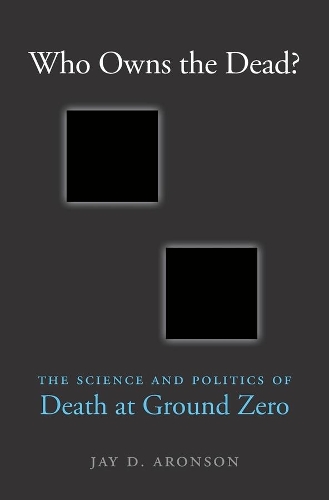
Книга Who Owns the Dead?: The Science and Politics of Death at Ground Zero
After September 11, with New Yorkers reeling from the World Trade Center attack, Chief Medical Examiner Charles Hirsch proclaimed that his staff would do more than confirm the identity of the individuals who were killed. They would attempt to identify and return to families every human body part recovered from the site that was larger than a thumbnail. As Jay D. Aronson shows, delivering on that promise proved to be a monumentally difficult task. Only 293 bodies were found intact. The rest would be painstakingly collected in 21,900 bits and pieces scattered throughout the skyscrapers’ debris.
This massive effort—the most costly forensic investigation in U.S. history—was intended to provide families conclusive knowledge about the deaths of loved ones. But it was also undertaken to demonstrate that Americans were dramatically different from the terrorists who so callously disregarded the value of human life.
Bringing a new perspective to the worst terrorist attack in U.S. history, Who Owns the Dead? tells the story of the recovery, identification, and memorialization of the 2,753 people killed in Manhattan on 9/11. For a host of cultural and political reasons that Aronson unpacks, this process has generated endless debate, from contestation of the commercial redevelopment of the site to lingering controversies over the storage of unclaimed remains at the National 9/11 Memorial and Museum. The memory of the victims has also been used to justify military activities in the Middle East that have led to the deaths of an untold number of innocent civilians.
"Absorbing." - Maclean’s
"Most Americans are familiar with the events of September 11, 2001. This in-depth narrative by Aronson describes what came next as Americans attempted to make sense of the tragedy and decide how it should be remembered. The book details government and private organizations' work to recover remains, identify victims, and build a memorial. The 9/11 Memorial raised financial and legal controversies as well as heated moral arguments about the nature of grief. There are dozens of titles devoted to the collapse of the towers, victims and survivors, terrorism, and international politics, but this volume offers a new angle on the domestic aftermath. Tragedy and the often conflicted human response do not make for light reading, but this selection, with its historical analysis of public memorials and forensic details of the DNA recovery, reveals insights into societal and cultural norms and how they are changing in response to technology." - Library Journal
"Who Owns the Dead? is both a meticulous and illuminating look at how the victims of national disasters are honored on a massive scale, and at how complicated the task of public memory is." - Foreword Reviews
"The science of mass death is no easy thing to read or write about. It can, however, give us valuable insights into the way politics, technology, and a flood of grief can alter our perceptions of how we treat the dead…Aronson’s account describes the recovery efforts amid the pandemonium after the [9/11] attack. This is sad, horrifying and often gruesome, but it is a story worth hearing." - New Scientist
"Thoroughly researched, eminently judicious, powerful, and poignant…Most important, perhaps, Aronson emphasizes throughout his fine book that Americans must find ways to understand, respect, and respond to the immense burdens bereaved families carry, as well as the cultural, economic, and political implications of public commemorations of mass deaths." - Philadelphia Inquirer
"A thoughtful and solidly informed meditation." - New York Review of Books