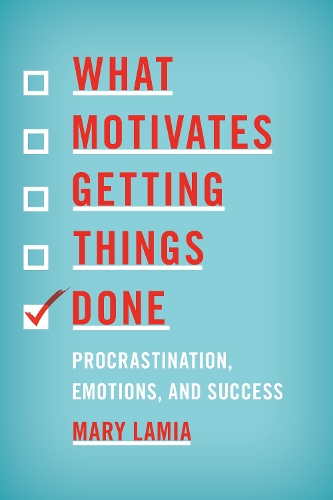
Книга What Motivates Getting Things Done: Procrastination, Emotions, and Success
A marvel of evolution is that humans are not solely motivated by their desire to experience positive emotions. They are also motivated, and even driven to achieve, by their attempt to avoid or seek relief from negative ones. What Motivates Getting Things Done: Procrastination, Emotions, and Success explains how anxiety is like a highly motivating friend, why you should fear failure, and the underpinnings of shame, distress, and fear in the pursuit of excellence. Many successful people put things off until a deadline beckons them, while countless others can’t resist the urge to do things right away. Dr. Lamia explores the emotional lives of people who are successful in their endeavors—both procrastinators and non-procrastinators alike—to illustrate how the human motivational system works, why people respond to it differently, and how everyone can use their natural style of getting things done to their advantage. The book illustrates how the different timing of procrastinators and non-procrastinators to complete tasks has to do with when their emotions are activated and what activates them. Overall, What Motivates Getting Things Done illustrates how emotions play a significant role in our style of doing, along with our way of being, in the world. Readers will acquire a better understanding of the innate biological system that motivates them and how they can make the most of it in all areas of their lives.
"Interestingly enough, both procrastinators and nonprocrastinators are successful in their endeavors, though each respond to motivation in different ways. Lamia, clinical psychologist and faculty chair has made a lifetime study of human emotions. She explains that people are moved to complete a task by not only positive but also negative emotions such as anxiety, fear of failure, and shame. Through her descriptions of personality types and motivators, readers learn to optimize their own style of action, respond to intense feelings, and be committed to meeting goals. The 'troubleshooting guide' at the end of the book outlines various ways to handle life’s glitches as they come along. VERDICT This motivating self-help guide will have wide appeal." - Library Journal
"When it comes to getting things done, according to clinical psychologist Lamia, we can be divided into two camps: task-driven and deadline-driven. The task-driven folks keep detailed lists of projects and can’t really rest until everything is checked off. The deadline-driven mull over commitments before they begin and use the pressure of a deadline to complete their work. Interestingly, Lamia doesn’t consider one approach to be better than the other. Although the task-driven seem to be on top of things, they can sometimes rush, producing work that isn’t always their best. Despite the last-minute heroics, the deadline-driven can complete their work on time and produce high-quality results. (She does make a distinction between procrastinators who meet and don’t meet their deadlines.) The trick is embracing your style and working with it. Lamia provides illuminating insights into the positive and negative emotions that shape these attributes as well as a troubleshooting guide that offers concrete suggestions on ways to successfully harness stress and clear that to-do list." - Booklist
"Clinical psychologist Lamia…. analyzes the difference between successful people who are procrastinators—’deadline-driven’ people—and non-procrastinators—’task-driven’ people. Emphasizing that anxiety can be a positive motivating force, Lamia writes that task-driven people complete tasks to avoid the anxiety over having one remain unfinished. Deadline-driven people, conversely, use the anxiety they feel as a deadline approaches to get a task finished…. The book is at its best when addressing how being labeled a procrastinator can negatively affect children and adults, and how the two work styles interact with each other…. Readers will find some good advice for getting along with people with different work strategies." - Publishers Weekly
"Exceptionally well written, impressively informative and insightful, thoroughly 'reader friendly' in organization and presentation, What Motivates Getting Things Done: Procrastination, Emotions, and Success is an extraordinary and unreservedly recommended addition to community and academic library collections, as well as the personal reading lists for psychology students and non-specialist general readers with an interest in the subject." - Midwest Book Review