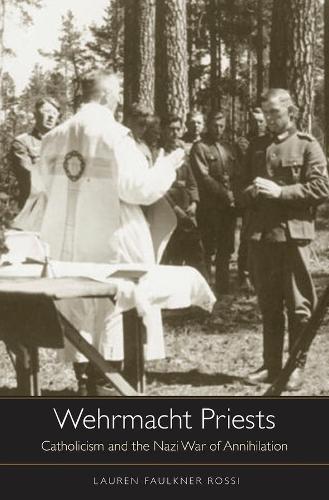
Книга Wehrmacht Priests: Catholicism and the Nazi War of Annihilation
Between 1939 and 1945 more than 17,000 Catholic German priests and seminarians were conscripted into Hitler’s Wehrmacht. Men who had devoted their lives to God found themselves advancing the cause of an abhorrent regime. Lauren Faulkner Rossi draws on personal correspondence, official military reports, memoirs, and interviews to present a detailed picture of Catholic priests who served faithfully in the German armed forces in the Second World War. Most of them failed to see the bitter irony of their predicament.
Wehrmacht Priests plumbs the moral justifications of men who were committed to their religious vocation as well as to the cause of German nationalism. In their wartime and postwar writings, these soldiers often stated frankly that they went to war willingly, because it was their spiritual duty to care for their countrymen in uniform. But while some priests became military chaplains, carrying out work consistent with their religious training, most served in medical roles or, in the case of seminarians, in general infantry. Their convictions about their duty only strengthened as Germany waged an increasingly desperate battle against the Soviet Union, which they believed was an existential threat to the Catholic Church and German civilization.
Wehrmacht Priests unpacks the complex relationship between the Catholic Church and the Nazi regime, including the Church’s fierce but futile attempts to preserve its independence under Hitler’s dictatorship, its accommodations with the Nazis regarding spiritual care in the military, and the shortcomings of Catholic doctrine in the face of total war and genocide.
"[Faulkner Rossi’s] book should be read by all who seek an answer to the question she raises—not least because of its uncomfortable parallels in our own time, when uncritical loyalty to an institution and fear of scandal allowed clerical child abuse to go unchecked… Historians will continue to sift and interpret the evidence. Nonetheless, this remains a disturbing book." - Catholic Herald
"The Catholic Church’s role in Nazi Germany remains an important topic of study…There is much to commend in this book: its approach, evidence, and clarity of style." - Choice