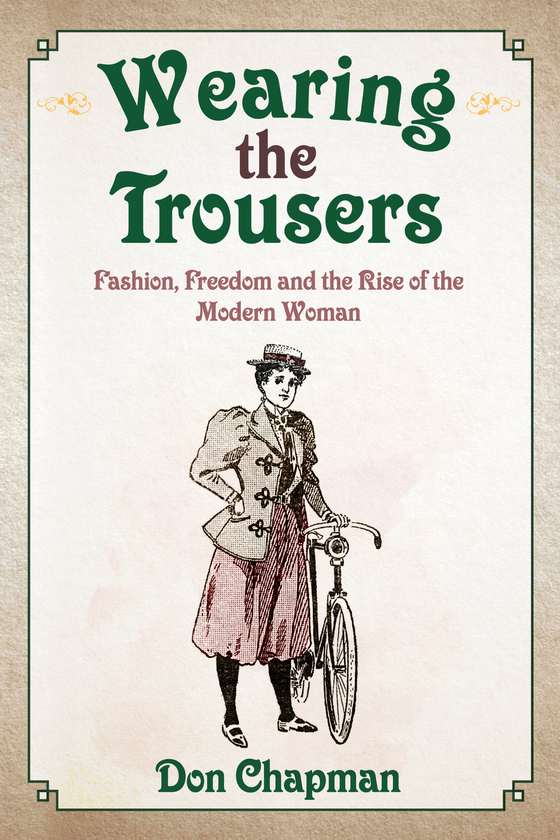
Don Chapman traces the development of this new movement through the changing fashions. With every new style of dress, there came predictable outcries of disapproval and satire from the world's press. Slowly, inch by inch and stitch by stitch, the women made progress. At the turn of the century, campaigners such as Lady Harberton championed the new 'Rational Dress Movement', adroitly rebranding the movement as a rational cause – the buzzword of the day for all right-thinking individuals – and thereby giving the case for the divided skirt a new scientific justification. Her movement would scandalize and inspire many, from H. G. Wells to George Bernard Shaw. Merging with the early Suffragist cause in 1907, the story of women's fashion takes in issues as various as the working conditions of garment makers, female prostitution and the nineteenth-century slave trade. Wearing the Trousers charts the progression from the corseted lady at a remove from the Establishment to the liberated woman at work in a modern, more inclusive society.
- Features evidence from newspaper archives of the time, recreating in vivid detail the back-and-forth of public opinion
- Coincides with recent exhibitions at the Victoria & Albert Museum in London and Tussauds (which staged the first exhibition on Bloomerism in Britain)
- Richly illustrated throughout with visual aids showing changing social attitudes