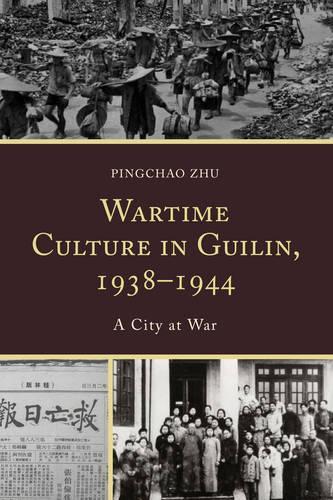
Книга Wartime Culture in Guilin, 1938–1944: A City at War
This book examines the development of wartime culture in the city of Guilin, Guangxi Province, in southwestern China during a major part of the country’s war of resistance against Japanese invasion between 1938 and 1944. This study challenges existing historiography on China’s wartime culture at three levels. First, the Guangxi warlord group played a crucial role in maintaining regional security, providing a liberalized political environment for wartime cultural activities and facilitating wartime nationalist–communist relations at both local and national levels. Second, wartime culture was more literary than political and it reflected a powerful intellectual vigor that was an indispensable component of China’s war efforts. Intellectuals of different social and political backgrounds were their own “organic” selves feeling no pressure to come to intellectual consensus in literary production. Third, wartime culture was characterized by the active participation of many international groups, political organizations, and foreign individuals. The literary works produced in Guilin between 1938 and 1944 clearly reflected a combination of Chinese national and international anti-fascist and anti-military sentiment. Chinese literary masterpieces were translated into different foreign languages and noted foreign literature and political works were introduced to Chinese audiences through various cultural and political exchange programs in the city.
"Guilin, a small town in south China, is famous for its dramatic landscape of karst hills. During China’s war with Japan in the 1930s and 1940s, it attracted refugees from east China, including many famous left-wing writers and artists. Zhu explains why they chose Guilin. Geographically, it was not as exposed to Japanese air attack. More important, though, it was ruled by the so-called Guangxi clique of warlords, who attempted to maintain political autonomy in defiance of the Nationalist regime of Chiang Kai-shek. Guangxi militarists encouraged refugee intellectuals to make Guilin a cultural center. Zhu offers an impressive list of the novels, poetry, newspapers, and plays produced there and an analysis of the city’s connections with the Nationalists based in Chongqing and the Chinese Communists based in Yan’an. The final chapter discusses foreigners who visited, including the Vietnamese Communist leader Ho Chi Minh and the writer Ernest Hemingway. The author utilizes much Chinese-language scholarship on Guilin, such as an intriguing section on efforts to persuade Japanese POWs to renounce Japanese militarism. Of most interest to specialists on China’s wartime culture. Summing Up: Recommended. Most academic levels/libraries." - CHOICE
"Individuals and even entire societies are “processed” by war and emerge from the experience changed. As this well-researched book illustrates, an excellent example of this phenomenon is what happened to Chinese society and Chinese intellectuals as a result of the Sino-Japanese War of 1937-1945.... Dr. Zhu does an excellent job of describing and analyzing the origins of this “unique cultural phenomenon,”.... This book is a truly scholarly work. For those interested in expanding their understanding of the Sino-Japanese War into the area of how culture and art were used to mobilize civilians and develop a spirit of resistance, this is a good book to read.... [F]or those who make the effort, learning the truths revealed in Dr. Zhu’s study will make their efforts worthwhile." - Journal of Chinese Military History