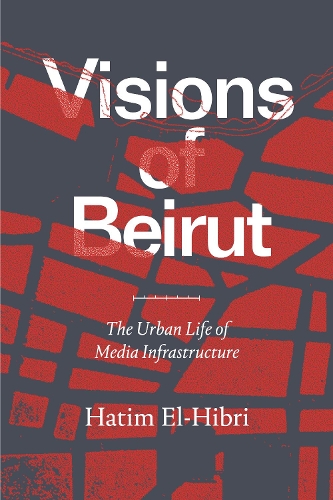
In Visions of Beirut Hatim El-Hibri explores how the creation and circulation of images have shaped the urban spaces and cultural imaginaries of Beirut. Drawing on fieldwork and texts ranging from maps, urban plans, and aerial photographs to live television and drone-camera footage, El-Hibri traces how the technologies and media infrastructure that visualize the city are used to consolidate or destabilize regimes of power. Throughout the twentieth century, colonial, economic, and military mapping projects helped produce and govern Beirut's spaces. In the 1990s, the imagery of its post-civil war downtown reconstruction cast Beirut as a site of financial investment in ways that obscured its ongoing crises. During and following the 2006 Israel/Hizbullah war, Hizbullah's use of live television broadcasts of fighting and protests along with its construction of a war memorial museum at a former secret military bunker demonstrate the tension between visualizing space and the practices of concealment. Outlining how Beirut's urban space and public life intertwine with images and infrastructure, El-Hibri interrogates how media embody and exacerbate the region's political fault lines.
"“Hatim El-Hibri weaves a narrative that articulates concealment and infrastructure onto a conceptual terrain that transcends the empirical context of Lebanon. This engaging, groundbreaking, and indispensable book makes a truly meaningful and influential intervention in global media studies, Middle East studies, and urban studies.”" - The Naked Blogger of Cairo: Creative Insurgency in the Arab World
"
“Visions of Beirut comes at a crucial moment for the city and for the country, coinciding with the most stringent economic crisis Lebanon has ever faced and in the aftermath of one of the largest nonnuclear explosions ever recorded.... The recent events confirm, once again, El-Hibri’s treatise and the validity of its theoretical framework."
" - Information & Culture
"“Visions of Beirut offers a lot to its readers. It will be of great interest to scholars of global media, Middle Eastern studies, and urban studies and will make an excellent addition to many graduate-level syllabi.”" - International Journal of Middle East Studies