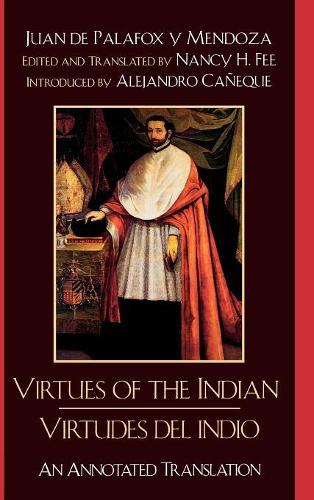
Книга Virtues of the Indian/Virtudes del indio: An Annotated Translation
This important book is the first complete seventeenth-century treatise on Native Americans to be introduced, annotated, and translated into English. Presented in a parallel text translation, it brings the work of the controversial and powerful Bishop Juan de Palafox to non-Spanish speakers for the first time. A seminal document in the history of colonial Mexico and imperial Spain, Virtues of the Indian tells us as much about the Mexican natives as about the ideas, images, and representations upon which the Spanish Empire in America was built. Taken as a whole, this book will raise questions about the Spanish empire and the governance of New Spain's Indians. Even more significantly, it will complicate the prevailing view of Spanish imperialism and colonial society as one dominated by a unified and coherent ruling elite with common goals. The deeply-informed introduction, biographical essay, and annotations that accompany this vivid translation further explore the thoughts and actions of the dynamic and complex Palafox, contributing to a better knowledge of a key figure in the history of Spanish colonialism in the New World.
"This is a fascinating work largely unknown except by specialists of the period. Fee has written a very complete bibliographical essay—a very good introduction to the text and period." - The Americas: A Quarterly Review of Latin American History
"Nancy Fee's translation of the bishop's treatise on Indians is timely and most welcome. . . . Missing from much of the scholarly literature is an assessment of Palafox y Mendoza's exercise of Episcopal power. To that end, Nancy Fee has edited a bilingual edition of what is perhaps the most important European account of Indians in central Mexico produced in the seventeenth century. . . . Fee provides readers with a competent biographical sketch of Palafox y Mendoza, drawing upon the relevant printed matter and archival sources that historians have used for years to reconstruct the life and career of the bishop." - Colonial Latin American Historical Review
"The volume is handsomely edited and elegantly translated. . . . This is a splendid volume that colonial Latin Americanists will appreciate. The work should be assigned to upper-division undergraduates and graduate students in Latin American history courses. . . . The combination of historical and biographical context with the richness of this source will provide plenty for hungry students to chew on." - Hispanic American Historical Review