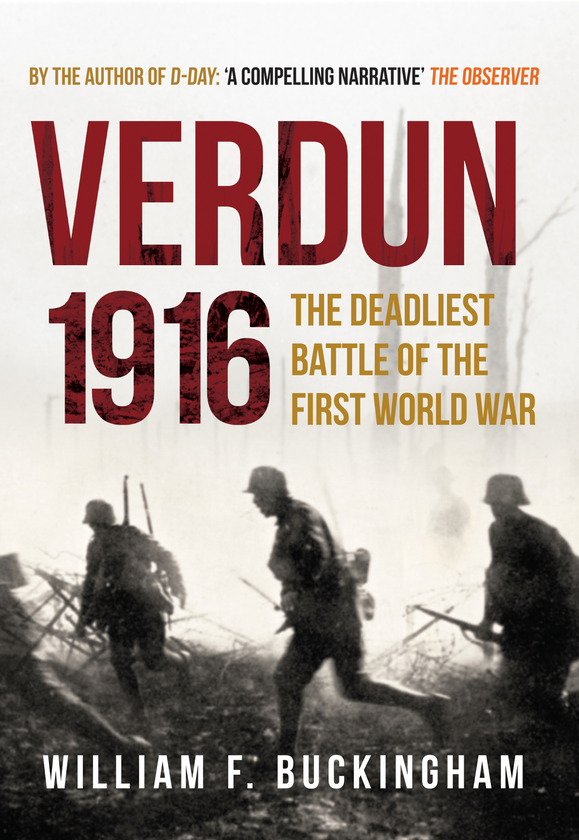
Massed artillery was employed on a hitherto unprecedented scale; the initial bombardment lasted for nine hours and saw 80,000 shells fall on the French trench line, while on the ground the initial attack saw the combat debut of storm-troop tactics and the man-pack flamethrower. As the battle raged the combatants endured heat and thirst akin to desert conditions together with bottomless mud as bad as at Passchendaele. In addition, fixed defences like the forts of Douaumont and Vaux sparked hellish underground fighting in subterranean pitch darkness that occurred nowhere else on the Western Front.
The result was almost 200 square kilometres of ground that had been blasted, ploughed and poisoned into a wasteland by explosives and gas, so much so that the post-war French authorities were unable to return it to its former agricultural use and simply left it to the elements.
- Published to coincide with the centenary anniversary of the beginning of the battle, 21 February 2016.
- Praise for the author's last two books: D-Day - 'A compelling narrative’, The Observer; Arnhem 1944: 'An excellent read', Sir Hew Strachan.
- Reviews in the broadsheets and history and military history magazines to include: BBC History Magazine, Soldier Magazine and The Sunday Telegraph.