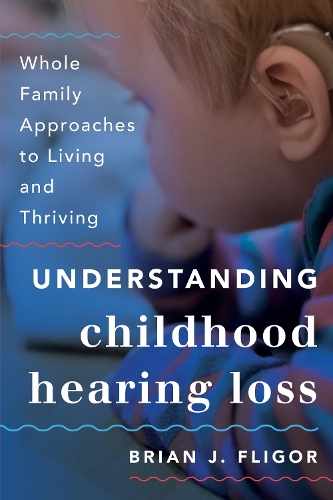
Книга Understanding Childhood Hearing Loss: Whole Family Approaches to Living and Thriving
Childhood hearing loss is more common than most people assume, and yet this invisible condition can rob a child of the ability to develop close emotional relationships with family and friends. This book demystifies this condition and offers emotionally-supportive approaches to caring for the child and the whole family. It is written from the perspective of a pediatric audiologist who has diagnosed hearing loss in hundreds of newborns and young children, and who has shaped clinical best-practices during his career. Hearing loss is not an “all or nothing” condition, but a range from very subtle, slight challenges, to very little ability to hear. The impact that hearing loss can have on a child’s language, intellectual, social and emotional development is enormous. But when the team of healthcare providers, developmental specialists, and parents are all working together, the hearing loss can become just another trait of this wonderful, unique child, rather than the single condition that defines the child and the family’s experience raising that child. This book offers an explanation of “what is hearing loss” for parents, describes who is on the team working with the child (and team members’ roles), and practical guidance for navigating what can be an uncertain path for families. Any family living with a child with hearing loss will benefit from the gentle guidance and hopeful stories found in this work.
"Almost 16,000 babies are born with hearing loss in the U.S. each year. Childhood hearing loss is a life-altering occurrence for a child and his or her parents. In this educational and empathic guidebook, pediatric audiologist Fligor stresses that the aim of testing and intervention is 'breaking down the barriers to normal development' and 'to give the child with hearing loss access to language.' Chapters cover the various causes of childhood hearing loss, different kinds of tests, diagnosis, treatment options, devices (hearing aids, cochlear implants, bone-anchored hearing system), and the effects of decreased hearing on a child’s everyday life. Social and emotional isolation are not uncommon. School-age children and teens with hearing loss have a higher risk of being picked on or bullied. Treatment for hearing loss should optimally begin before age six months. Managing hearing loss in children should be family centered and requires teamwork (child, parents, pediatrician, speech-language pathologist, teachers, audiologist, and otolaryngologist). Fligor emphasizes that 'hearing loss is only a characteristic of your child, and not the single thing that defines him.'" - Booklist
"This book provides an excellent description of childhood hearing loss. Fligor thoroughly and successfully covers a wide range of essential information that parents need in order to make educated decisions about their child's treatment. He discusses topics such as the challenges of gaining insurance coverage for hearing aids, the pros and cons of various treatments, and the importance of early intervention for ideal speech and language development. He also addresses the challenges that both the children and their parents encounter when dealing with hearing loss. Though the author introduces some of his topics as being more technical or difficult, he consistently describes conditions and treatments in easy-to-understand language. His use of visual aids to illustrate hearing loss at different levels is very effective. In addition, Fligor excels at conveying and encouraging empathy for children with hearing loss as well as for their parents. This book is essential not only for parents but also for students, educators, clinicians, and anyone else who works regularly with children with hearing loss. Summing Up: Highly recommended. All readership levels." - CHOICE
"[T]his book is a useful read for all professionals involved with hearing impaired children. It gives insight into how parents may view clinic sessions and how we, as clinicians, can help them to understand the hearing loss and the requirement for early intervention in a way that addresses their concerns for their child’s future in a more relevant way. Overall, I would recommend this book for parents and paediatric audiologists, especially those who are less experienced with paediatrics." - ENT & Audiology News