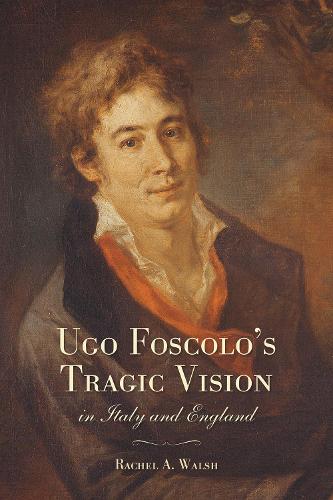
Книга Ugo Foscolo's Tragic Vision in Italy and England
"While many scholars have written in piecemeal fashion about the three tragedies Foscolo wrote, Walsh is the first to demonstrate their intrinsic worth as well as their evolving role in Foscolo's career. This is a well-researched book that leaves no stone unturned." -- Clorinda Donato, George L. Graziadio Chair of Italian Studies, California State University, Long Beach "Erudite and well informed, Rachel A. Walsh's study of Ugo Foscolo the tragedian tackles a seriously understudied subject that is eminently worthy of more scholarly attention, both because of its important place in the literary output of one of Italy's most important writers and because of its visceral link to issues of Italian identity in the period leading up to the Risorgimento." -- Joseph Luzzi, Italian Studies Program, Bard College
One of the most celebrated Italian writers of the early Romantic period, Ugo Foscolo (1778–1827) was known primarily as a novelist, a poet, and a nationalist. Following the Napoleonic Wars, he lived in self-exile in England during the last decade of his life. There he wrote numerous critical essays and collaborated with Lord Byron and other well-known members of English literary circles.
Ugo Foscolo’s Tragic Vision in Italy and England examines an underexplored aspect of Foscolo’s literary career: his tragic plays and critical essays on that genre. Rachel A. Walsh argues that for Foscolo tragedy was more than another genre in which to exercise his literary ambitions. It was the medium for an elaborate life-long process of self-examination and engagement with political and literary conflict. By analysing Foscolo’s tragic struggles on and off the stage, Walsh sheds new light on his career and how it reflects on the important literary and political trends of the time.
"
‘This study contains much to be recommended…. There is a laudable attempt to discuss the tragedies as vital pieces for stage, rather than sterile texts that ‘slumber in the libraries’.’
" - Modern Language Review vol 111:03:2016