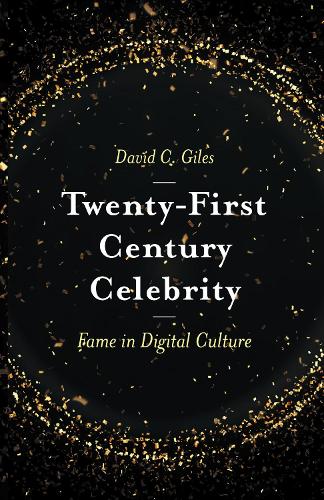
Книга Twenty-First Century Celebrity: Fame in Digital Culture
Over the first two decades of the 21st century, celebrity has undergone significant changes as mass media have shifted from a restricted broadcast model to a digital free-for-all. Existing celebrities have been forced to adapt their style of presentation to suit a more interactive environment where fans expect continuous access, while the emergent social media have generated new forms of celebrity that reflect the unique affordances of YouTube, Instagram and other platforms.
In this book, David Giles argues that these developments are best understood by rethinking traditional concepts of media and audience in order to explain how a platform like YouTube has evolved its own media culture that affords a different type of celebrity to those associated with cinema, radio and television. Above all else, the 21st century celebrity is valued more for their (apparent) authenticity than for their glamour or talents, and Giles examines how that authenticity is a carefully crafted performance. Drawing extensively on the burgeoning celebrity studies literature, he explores the impact of digital culture on earlier concepts like parasocial relationships and celetoids as well as critiquing more recent ideas such as microcelebrity.
"The author argues that celebrity during the digital age is shifting towards a system of representation that is more fluid and decentered, allowing for different kinds of celebrity to emerge, which have different relationships to audiences. He discusses how new kinds of celebrity are connected to emerging forms of media; how they are linked to different kinds of audiences and the significance of the relationship with these audiences; key cultural events of the first two decades of the 21st century and their implications for the study of celebrity, including reality TV, "webcam girls," and California tech entrepreneurs; the obligatory use of social media by celebrities, particularly Twitter; new forms of celebrity, including YouTube celebrities, Instagram and social media "influencers," and meme celebrities; and the future of celebrity, with discussion of the Snapchat celebrity, the field of persona studies, and how social media has facilitated new forms of populism that have allowed celebrities from nonpolitical fields to emerge as contenders for political office, including Donald Trump." - (protoview.com)