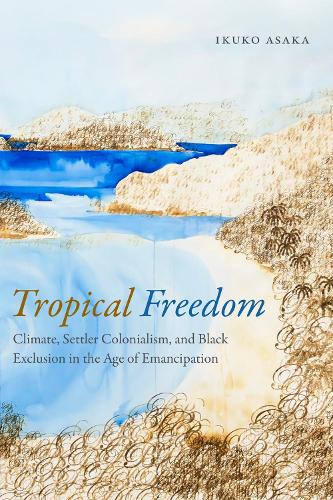
Книга Tropical Freedom: Climate, Settler Colonialism, and Black Exclusion in the Age of Emancipation
In Tropical Freedom Ikuko Asaka engages in a hemispheric examination of the intersection of emancipation and settler colonialism in North America. Asaka shows how from the late eighteenth century through Reconstruction, emancipation efforts in the United States and present-day Canada were accompanied by attempts to relocate freed blacks to tropical regions, as black bodies were deemed to be more physiologically compatible with tropical climates. This logic conceived of freedom as a racially segregated condition based upon geography and climate. Regardless of whether freed people became tenant farmers in Sierra Leone or plantation laborers throughout the Caribbean, their relocation would provide whites with a monopoly over the benefits of settling indigenous land in temperate zones throughout North America. At the same time, black activists and intellectuals contested these geographic-based controls by developing alternative discourses on race and the environment. By tracing these negotiations of the transnational racialization of freedom, Asaka demonstrates the importance of considering settler colonialism and black freedom together while complicating the prevailing frames through which the intertwined histories of British and U.S. emancipation and colonialism have been understood.
"
“Tropical Freedom is an ambitious and satisfying book. Ikuko Asaka balances the two focuses of her work—free black people’s understandings of their freedom and belonging, and white imperial understandings of tropicality, labor, and the spaces of black freedom—with deft organization and clarity.”
" - H-Diplo, H-Net Reviews"Tropical Freedom is a bold book that takes a variety of historical frameworks—among them settler colonialism, environmental determinism, and the geography of freedom—to tell the complicated story of African North Americans in the age of emancipation. This is a fascinating narrative and a welcome addition to the field." - Western Historical Quarterly
"Wonderful. . . . Tropical Freedom is undoubtedly a contribution to historiographies of Black colonization, it is also represents a significant contribution to the fields of settler colonial studies, Black Studies, gender and sexuality studies, critical geographies and race and space scholarship. Tropical Freedom is an important book to read and teach." - Reviews in History
"In its breadth of analysis and focussed case studies from Ottawa to Haiti; its transnational scope and archival research (the national archives of Canada and the United Kingdom are impressively mined); and its provoking, persuasive arguments, Tropical Freedom is one of the finest monographs I have read in a long while. It forges new links in transatlantic historiographies of labor, migration, and racial formation, and is essential reading for scholars interested in discourses of race, gender, climate, and settler colonial identity in North America in the era of emancipation." - Journal of American Studies