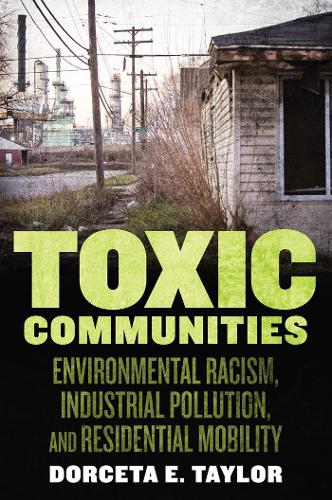
Книга Toxic Communities: Environmental Racism, Industrial Pollution, and Residential Mobility
Uncovers the systemic problems that expose poor communities to environmental hazards
From St. Louis to New Orleans, from Baltimore to Oklahoma City, there are poor and minority neighborhoods so beset by pollution that just living in them can be hazardous to your health. Due to entrenched segregation, zoning ordinances that privilege wealthier communities, or because businesses have found the ‘paths of least resistance,’ there are many hazardous waste and toxic facilities in these communities, leading residents to experience health and wellness problems on top of the race and class discrimination most already experience. Taking stock of the recent environmental justice scholarship, Toxic Communities examines the connections among residential segregation, zoning, and exposure to environmental hazards. Renowned environmental sociologist Dorceta Taylor focuses on the locations of hazardous facilities in low-income and minority communities and shows how they have been dumped on, contaminated and exposed.
Drawing on an array of historical and contemporary case studies from across the country, Taylor explores controversies over racially-motivated decisions in zoning laws, eminent domain, government regulation (or lack thereof), and urban renewal. She provides a comprehensive overview of the debate over whether or not there is a
link between environmental transgressions and discrimination, drawing a clear picture of the state of the environmental justice field today and where it is going. In doing so, she introduces new concepts and theories for understanding environmental racism that will be essential for environmental justice scholars. A fascinating landmark study, Toxic Communities greatly contributes to the study of race, the environment, and space in the contemporary United States.
"In this excellent assessment of multimethod research, Taylor brings a refreshing emphasis on nuance and accountability to the environmental justice discussion . . . provides a comprehensive, objective, and balanced portrait of environmental justice to date." - Choice
".a survey of the environmental justice movement which has so crucially challenged white traditions of conservation and the pastoral images of land and ecology that are their hallmarks." - Art Journal
"Dorceta Taylors book,Toxic Communitiesis an intellectually weighty book that elevates the discussion of environmental justice."An intellectually weighty book that elevates the discussion of environmental justice" - Human Ecology
"It offers a valuable review of the diverse mechanisms of structural racism that has produced and maintained patterns of residential segregation, spatial exclusion, and environmental injustices in the United States." - PsycCritques
"Well-written and researched." - Olive Branch United
"Dorceta Taylor, a distinguished scholar in the field of environmental sociology, has just published a book that contributes to research on environmental racism in the USA. InToxic Communities,Taylor surveys long-standing debates in the field of environmental justice and identifies new theoretical and methodological directions for environmental justiceresearchers." - Urban Studies