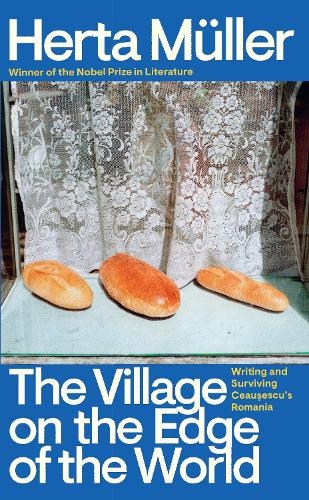
A remarkably candid and discomfiting interview with the Nobel Prize laureate, reflecting on a literary life defined by the brutality of Ceaucescu's regime.
From her childhood in Romania, in a village 'as small as a thimble on the edge of the world', through to life in exile in Germany, Herta Müller's story unspools against the tumultuous history of Romania in the latter half of the twentieth century. Here, the Nobel Prize laureate reflects on cultural history, memory and trauma, and on what it was to live and write during Ceausescu's regime: on the friendships that buckled under the weight of fear and paranoia; on the experience of being surveilled and interrogated; and on the unique blend of fear and tedium borne through life under totalitarianism.
The Village on the Edge of the World is a book that chronicles the minutiae of life under both fascism and the Soviet Union, while charting the existential questions posed by these regimes of the twentieth century - and how they remain with us in the twenty-first.
"A vivid reflection on life and literature" - FT
"Certain to be brilliant" - New Statesman
"Müller is an unnervingly acute observer and the account here of the nightmarish texture of persecution is equal in its intensity to any in fiction... The Village on the Edge of the World is an autobiographical work of rare and unsettling honesty, an extraordinary and uncompromising telling of an extraordinary and uncompromising life" - Literary Review