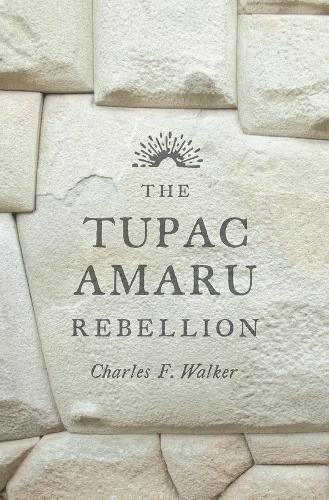
Книга The Tupac Amaru Rebellion
The largest rebellion in the history of Spain's American empire—a conflict greater in territory and costlier in lives than the contemporaneous American Revolution—began as a local revolt against colonial authorities in 1780. As an official collector of tribute for the imperial crown, José Gabriel Condorcanqui had seen firsthand what oppressive Spanish rule meant for Peru's Indian population. Adopting the Inca royal name Tupac Amaru, he set events in motion that would transform him into Latin America's most iconic revolutionary figure.
Tupac Amaru's political aims were modest at first. He claimed to act on the Spanish king's behalf, expelling corrupt Spaniards and abolishing onerous taxes. But the rebellion became increasingly bloody as it spread throughout Peru and into parts of modern-day Bolivia, Chile, and Argentina. By late 1780, Tupac Amaru, his wife Micaela Bastidas, and their followers had defeated the Spanish in numerous battles and gained control over a vast territory. As the rebellion swept through Indian villages to gain recruits and overthrow the Spanish corregidors, rumors spread that the Incas had returned to reclaim their kingdom.
Charles Walker immerses readers in the rebellion's guerrilla campaigns, propaganda war, and brutal acts of retribution. He highlights the importance of Bastidas—the key strategist—and reassesses the role of the Catholic Church in the uprising's demise. The Tupac Amaru Rebellion examines why a revolt that began as a multiclass alliance against European-born usurpers degenerated into a vicious caste war—and left a legacy that continues to influence South American politics today.
"[This is] the first extended survey of the causes and the course of the Tupac Amaru rebellion to appear in English since 1966… [It] is a lucid and accessible survey in which Walker skillfully blends narrative with explanation to construct a harrowing story of violence and atrocities on an enormous scale… [It] will give Anglophone readers a perceptive and reliable account of the terrible events that occurred far away from what they naturally regard as the principal center of action at that time, the British North American colonies, a mere 322,000 square miles in size, as compared with an Andean surface area approaching two million." - New York Review of Books
"The Tupac Amaru rebellion began in the Spanish viceroyalty of Peru in 1780 and turned into the largest popular uprising in Spain’s imperial history. To this day, its impact resonates in modern Latin American politics. The rebellion receives masterly treatment from Walker." - Financial Times
"[This] is a coherent and thorough exploration of the causes, dynamics, and outcome of the insurgency. It sheds new light on many important topics and provides overarching interpretive frames… This book at least comes to attend to a very overdue and tangible need: a thoughtful, well-researched, and analytically sophisticated narrative of the most important indigenous insurrection in Andean history." - Hispanic American Historical Review
"A solid new history of the Peruvian Indian revolutionary lays out the roots of his rebellion and its bitter legacy… A readable, not‐too‐scholarly story of a significant moment in South American history." - Kirkus Reviews
"Walker argues convincingly that Tupac Amaru’s wife, Micaela Bastidas, was his fierce, full partner and confidante, running the rebel camp, overseeing provisions, keeping discipline, and rooting out spies… It’s an interesting and accessible treatment of Peru’s infamously vicious conflict and of its leader, who became a potent symbol for indigenous rights throughout Latin America." - Publishers Weekly